
Alice in Borderland didn’t just survive Netflix’s live-action manga experiment — it became the blueprint. The 2020 series, a Lynchian fever dream wrapped in Tokyo’s post-apocalyptic skin, proved that translating manga to screen wasn’t a fool’s errand. It was a reckoning. And now, three years after its final season ended on a cliffhanger, the show is being quietly hailed as the quiet catalyst behind Netflix’s entire adaptation strategy. Not One Piece. Not Cowboy Bebop. Alice in Borderland. That’s the one that made the studio believe it could work. The proof? A new wave of high-stakes, tonally daring adaptations are already in motion. Resident Evil, Zach Cregger’s 2026 blockbuster, didn’t just smash box office records, it carried the DNA of Alice in Borderland: surreal stakes, emotional weight, and a world where every game has a body count. Even Squid Game’s cold critique of capitalism feels like a cousin to Arisu’s journey through lethal children’s games. But while Squid Game leaned into social commentary, Alice in Borderland leaned into the absurd. The tone was never consistent. That was the point. It’s rare for a show to be both discomfiting and deeply human. Yet Alice in Borderland managed it. With characters you’d swear were real, even as they vanished mid-season. The manga’s influence was clear, but the live-action version added layers: the silence between lines, the way light fell in empty train stations, the way death didn’t feel sudden, it felt inevitable. Fans weren’t just watching. They were waiting. For the next game. For the next twist. For the next body. And then it ended. Season 3 concluded with unresolved threads, a lingering mystery about the origin of the Borderland, and a final shot that suggested the game wasn’t over. No confirmation yet. No official spinoff. But whispers are already circulating. Sources close to production say Netflix is evaluating a prequel exploring the first Games. Possibly set before Arisu arrived. Others suggest a global expansion, with different versions of the Borderland appearing in other cities. Nothing confirmed. Just momentum. Because Alice in Borderland didn’t just succeed. It changed what people expected from a live-action adaptation. It showed that style and substance could coexist. That a story rooted in a niche manga could become a cultural touchstone. That a show could be weird, beautiful, and terrifying, all at once. Now, as Netflix prepares its next wave of adaptations, the ghost of Arisu walks through every pitch meeting. The question isn’t whether another manga can make it. It’s whether anything else can match the weight of a game where the rules change every time you blink.
 Photo via Screen Rant
Alice in Borderland: How Netflix’s First Great Manga Adaptation Changed Everything
Alice in Borderland didn't just survive Netflix's live-action manga experiment — it became the blueprint.
In this story
Live site hype
around 2 reading right now · 357 today
Reported from
This article was written by the CutMirchi desk from the reporting above. Facts are attributed to their original publishers.
Read next
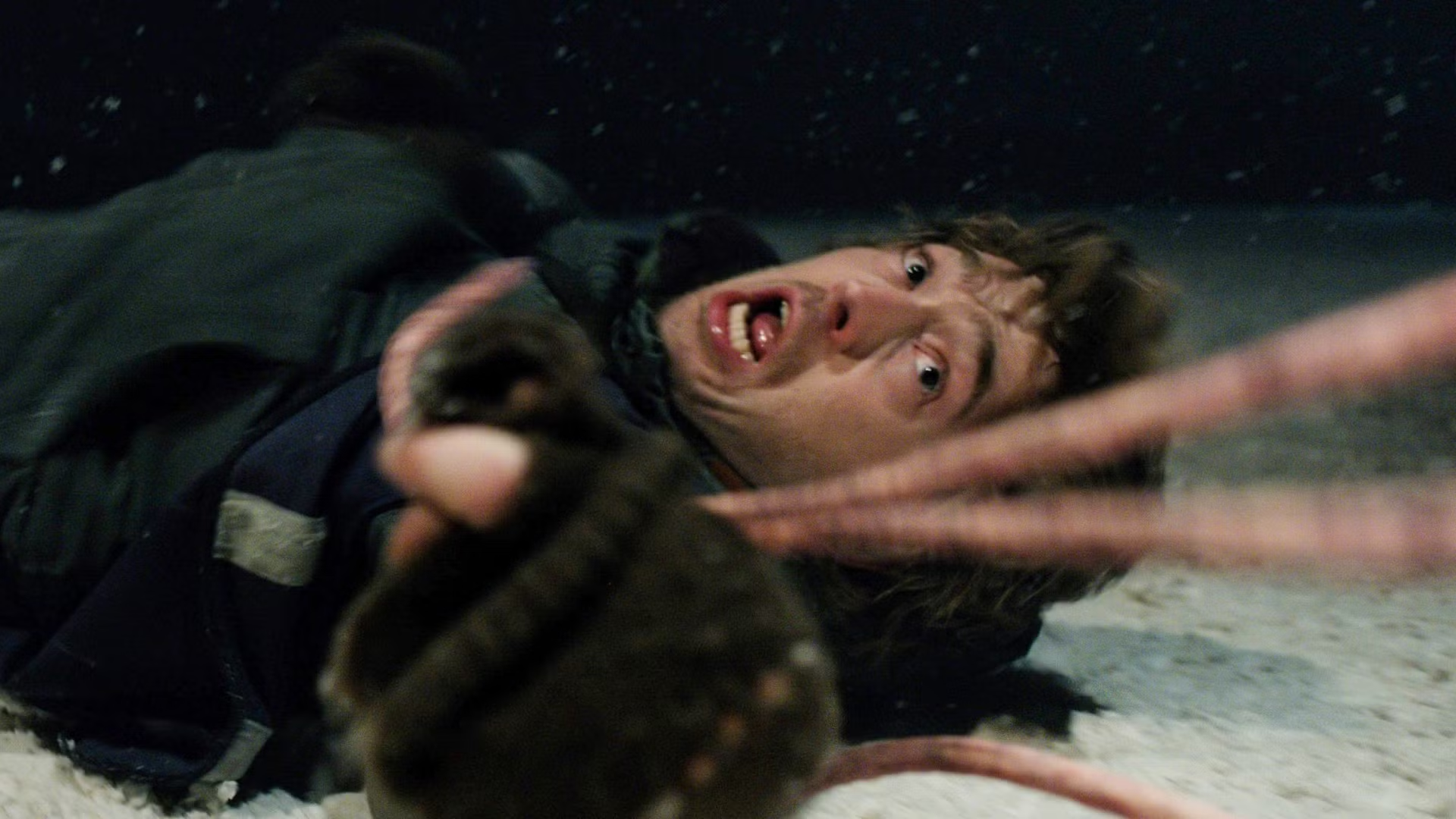
Zach Cregger’s Resident Evil Smashes Franchise Box Office Record
The 2026 reboot, written and directed by Zach Cregger, has grossed $320.2 million globally, surpassing all previous live-action installments and becoming the highest-grossing film in the franchise’s history.

Resident Evil Afterlife Streams On Netflix As Its Record Nears Fall
Resident Evil: Afterlife is now streaming on Netflix in the US, arriving just as Zach Cregger's new reboot closes in on the film's 16-year-old box office record for the franchise.

Netflix’s First 2026 Christmas Movie Is a Dog With a Mission
A Dog’s Perfect Christmas, Netflix’s first holiday original of 2026, drops on November 4. It stars Dennis Quaid and features a basset hound named Winstead who must reunite a fractured family before Christmas Eve.

Epic – First Semester: From Cult Series to Streaming Disaster
Epic – First Semester is dead. Not just at the box office—where it limped to ₹10 crore and called it a day—but on Netflix, where it’s now being roasted like a burnt chapati in a meme war.
Be the first to comment
Join the argument. No password, just your email or a passkey.