Ramesh Taurani's ₹5 lakh cheque didn't just fund a film—it resurrected a career. The moment that launched Patthar Ke Phool was never about budget. It was about belief. And now, decades later, that belief has a name.
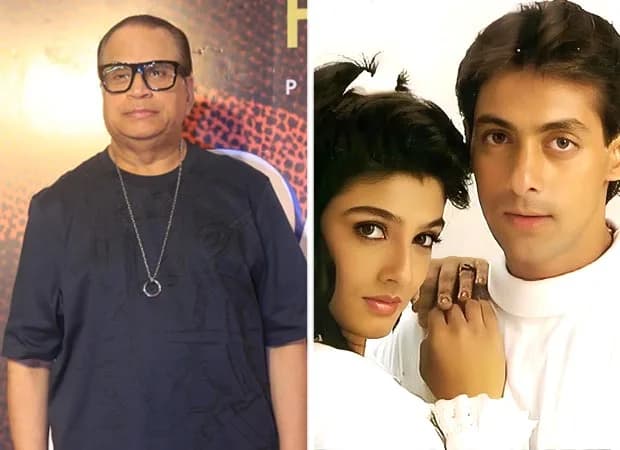
The first cheque for ₹5 lakh didn’t just clear a music bill. It cleared a career. Ramesh Taurani, co-founder of the music rights house that would become a benchmark in the industry, says it was that exact amount — paid to G P Sippy in 1990, that got Patthar Ke Phool rolling.
A film that wasn’t supposed to happen. A film that had no budget, no team, and no real plan. Except for a headline in Film Information magazine. That’s where Taurani saw the news: Salman Khan had been signed.
The announcement alone was enough to spark a chain reaction. He was there at Sippy’s office by Monday. No music director. No lyricist.
Just a name: Raamlaxman. And a price: ₹12 lakhs. Too high. But Taurani pushed through.
Final deal: ₹10 lakhs. The first payment? Half of it. ₹5 lakh. That went straight to Salman Khan, Raveena Tandon, and Salim Khan, who was also writing the script.
No greenlight. No production house. Just money on paper and faith in a name. The film went on floors.
Not because it was planned. Because someone believed it could be made. Today, Patthar Ke Phool is remembered as a turning point. Not just for Salman, but for the way Bollywood treated its stars’ next steps.
A single cheque, not from a studio, but from a music company, became the trigger. And it all started with a headline. The story begins earlier. In 1989, Taurani and his brother Kumar acquired the music rights to Elaan-E-Jung, an action film.
They installed six hoardings across Mumbai, Bandra, Juhu. To promote it. Unheard of for a music company. But they wanted to prove something.
‘Yeh toh acchi music company hai,’ filmmakers began saying. Then came Gunahon Ka Devta (1990). They paid ₹2.25 lakhs. Both brothers stayed awake for two nights after paying ₹25,000 upfront.
‘Inko Rs. 2 lakhs chukayenge kaise?’ they wondered. The risk was real. The stakes were higher than any contract. When the chance to buy Patthar Ke Phool came, it wasn’t about profit.
It was about momentum. Salim Khan had asked Sippy to announce Salman’s next film, even if no movie existed. ‘Bhale aap picture mat banao lekin aapke announcement se ek boost milega.’ The moment Taurani read it, he moved. He didn’t just want the rights.
He wanted the team behind Maine Pyar Kiya. Raamlaxman. Dev Kohli. SP Balasubrahmanyam.
Lata Mangeshkar. He told Sippy: ‘Yeh combination hi aap lena.’ Sippy hesitated. Viveck Vaswani had already pitched a ₹80 lakh project. Sippy turned him down.
Too small. But after meeting Taurani, he changed his mind. ‘Music ka aadmi aa gaya kheeli ek announcement pe. Toh iss project ko active karte hain.’ The film wasn’t funded by a studio.
It was funded by belief. And the first proof of that belief? A ₹5 lakh cheque. From a music company.
To a producer who hadn’t even decided to make the film yet. That’s how Patthar Ke Phool began. Not with a script. Not with a cast.
But with a promise, and a cheque.
Be the first to comment
Join the argument. No password, just your email or a passkey.