The saree had a new shape. The shoulder had a new purpose. And Janhvi Kapoor? She just walked through it all like she’d been waiting to do this for years.
Janhvi Kapoor didn’t just attend the BoF 500 Gala in Paris — she reimagined the saree for a global audience. The event, held on October 3, 2026, as part of Paris Fashion Week, brought together names from across the international fashion industry, and Kapoor made sure Indian craftsmanship wasn’t just present, it was central.
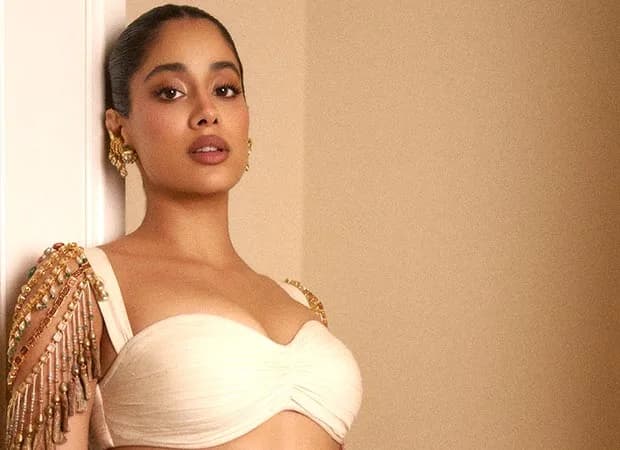
Her custom ensemble, crafted by Pankaj S Heritage and styled by Rhea Kapoor, drew from the traditional six-yard silhouette but transformed it with a modern edge. The off-white saree, made from 460-count Bengal Muslin, highlighted the delicate texture of the textile while maintaining an understated elegance. Its low-slung pleating at the waist created a sleek, sculpted line that followed her frame, while the pallu.
Instead of being draped over the shoulder, fell loosely from her right arm, extending toward the floor. This unconventional drape left her shoulders and neckline bare, giving the classic garment a contemporary, fluid feel. The blouse, designed with delicate straps and a sweetheart neckline, featured fine horizontal micro-pleating that added subtle texture without distracting from the silhouette.
But the true focal point lay in the jewellery. Rather than a necklace, Kapoor let her shoulders carry the statement. Ornate embellished pieces were draped across her arms, resembling decorative epaulets, composed of layered strands of gold beads, pearls, sea shells, emeralds, polkis, and dusty-pink tassels. These extended from the shoulders to the wrists, creating movement and visual rhythm against the minimal ivory base.
Chunky gold ear cuffs and stacked beaded bracelets completed the look, with cascading shell-and-tassel detailing on her left wrist adding a bohemian flourish. Her makeup was warm and sun-kissed. Defined brows, softly matte eyeshadow, bronzed cheeks, and a high-glow highlight, while a muted brown-nude lip kept the focus on the intricate details.
Hair was pulled into a clean, centre-parted low bun, offering a sharp contrast to the soft textures of the outfit. The styling successfully merged traditional Indian design elements with a modern silhouette, placing the emphasis firmly on craftsmanship and textile artistry. According to trade sources quoted by Koimoi, the look was widely discussed on social media, with fans noting its bold reinterpretation of the saree.
One post from The Free Press Journal described it as “desi drama” with a Parisian twist. The choice of Bengal Muslin. A fabric long associated with Indian heritage, added another layer of cultural reference to her appearance. This wasn’t just a red carpet moment.
It was a quiet revolution in how Indian fashion is seen abroad. And somewhere, someone in South Mexico is already asking: when’s the Spanish release?

Be the first to comment
Join the argument. No password, just your email or a passkey.