


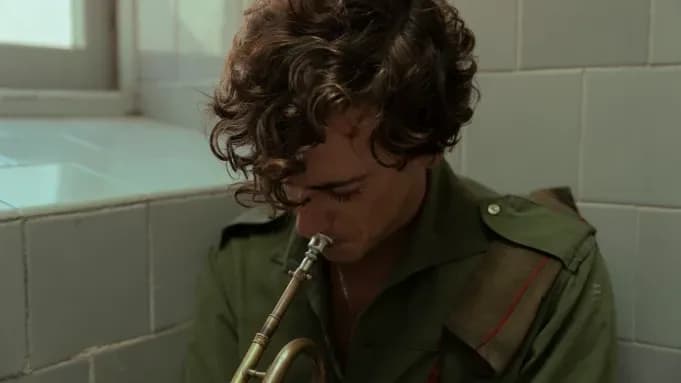
Netflix’s La Bola Negra lands in US cinemas this Friday, October 16, with a quiet rollout in New York and Los Angeles before its wider release. The film, a period war epic from Spanish duo Javier Calvo and Javier Ambrossi, is already on the Oscar shortlist trail after sharing Cannes’ top prize with Pawel Pawlikowski’s Fatherland. But the real story isn’t just what’s on screen — it’s what happened behind it. The two Javis, who’ve been partners in every sense since 2013, split during filming. Not creatively. Not over script notes. But personally. Mid-shoot, their relationship ended. They’re still writing, directing, producing together, just not as lovers. That tension? It’s in the frame. In the way the camera lingers on Sebastián (Guitarricadelafuente), a young soldier whose love for music and a fellow recruit burns through the chaos of war. In the way the past bleeds into the present: a modern-day academic (Carlos González) grapples with inherited trauma, asking, Who were we before we became ghosts? The film is built on that question. On Federico García Lorca’s unfinished play, La Bola Negra, which only exists in four pages. A ghost text. A lost dream. The directors found it on a flight. Calvo cried. So did Ambrossi when he read it. They didn’t just adapt it. They reimagined it. Made it live. Guitarricadelafuente signed without seeing a script. He was cast in soul, not audition. Penélope Cruz got two musical numbers. Glenn Close, moved by their earlier work La Mesías, agreed to a role despite needing to learn Spanish. No CGI bombs. Real explosions. Real costuming. Real pain. The film runs close to three hours. They cut scenes for length, but kept the heart. ‘It’s not designed to be popular,’ Calvo said. Yet it’s Spain’s official entry for Best International Feature. The selection will be announced September 16. And Netflix? It’s holding back the streaming launch until December 2. Why? Because they want it to matter. To feel like a moment. Not just another title. The breakup wasn’t a setback. It was part of the process. 'Every movie for us is cathartic,' Calvo said. 'It has to change us.' So they changed. And made something that doesn’t just speak to gay history, it is gay history. Raw. Unfiltered. Alive. Now, the world gets to see it. On screens. Then on Netflix. But first, the theatres. Friday. October 16. In LA. In NY. Then everywhere else. What happens next? The awards. The debates. The tears. The silence after the final note. We’ll know soon enough.
 Photo via IndieWire
La Bola Negra Opens in US Theatres This Friday After Cannes Win and Directors' Breakup
Netflix's La Bola Negra opens in US cinemas this Friday, October 16, after a Cannes triumph and a personal split between its directors. The film, based on Federico García Lorca’s unfinished play, is Spain’s Oscar contender—and a reckoning with queer history.
In this story
Live site hype
around 1 reading right now · 130 today

About the film
La bola negra
16 October 2026 · in theatres · cast, trailer and release details
Reported from
This article was written by the CutMirchi desk from the reporting above. Facts are attributed to their original publishers.
Read next

LA Bola Negra Release Date, Cast, Trailer and Box Office: Everything We Know
La Bola Negra, Spain's Oscar entry from Los Javis, opens in theatres on 16 October 2026 before streaming on Netflix from 2 December.

Netflix Drops La Bola Negra Trailer Ahead of US Theatrical Release
Netflix has released the official US trailer for La Bola Negra, the Cannes‑lauded queer drama by the Ambrossi‑Calvo duo. The film, which won the People's Choice Award in Toronto, will hit US theatres on October 16 after a September 25 debut in Spain.
Netflix Drops La Bola Negra Trailer, Sets Oct 16 Theatrical Release
Netflix has unveiled the trailer for La Bola Negra, the Spanish LGBT‑themed drama that won Best Director at Cannes and the People’s Choice Award at TIFF, confirming a limited theatrical run from Oct 16 before heading to the platform in early December.
Netflix Unveils La Bola Negra Trailer Ahead of October Theatrical Rollout
La Bola Negra, the TIFF People’s Choice winner directed by Javier Calvo and Javier Ambrossi, drops its first trailer on Netflix. The film lands in select LA and New York theatres on October 16, with streaming to follow.
Be the first to comment
Join the argument. No password, just your email or a passkey.