Two decades after The Two Towers hit screens, Samwise's line to Frodo about darkness passing keeps showing up on lists of cinema's greatest fantasy dialogue.
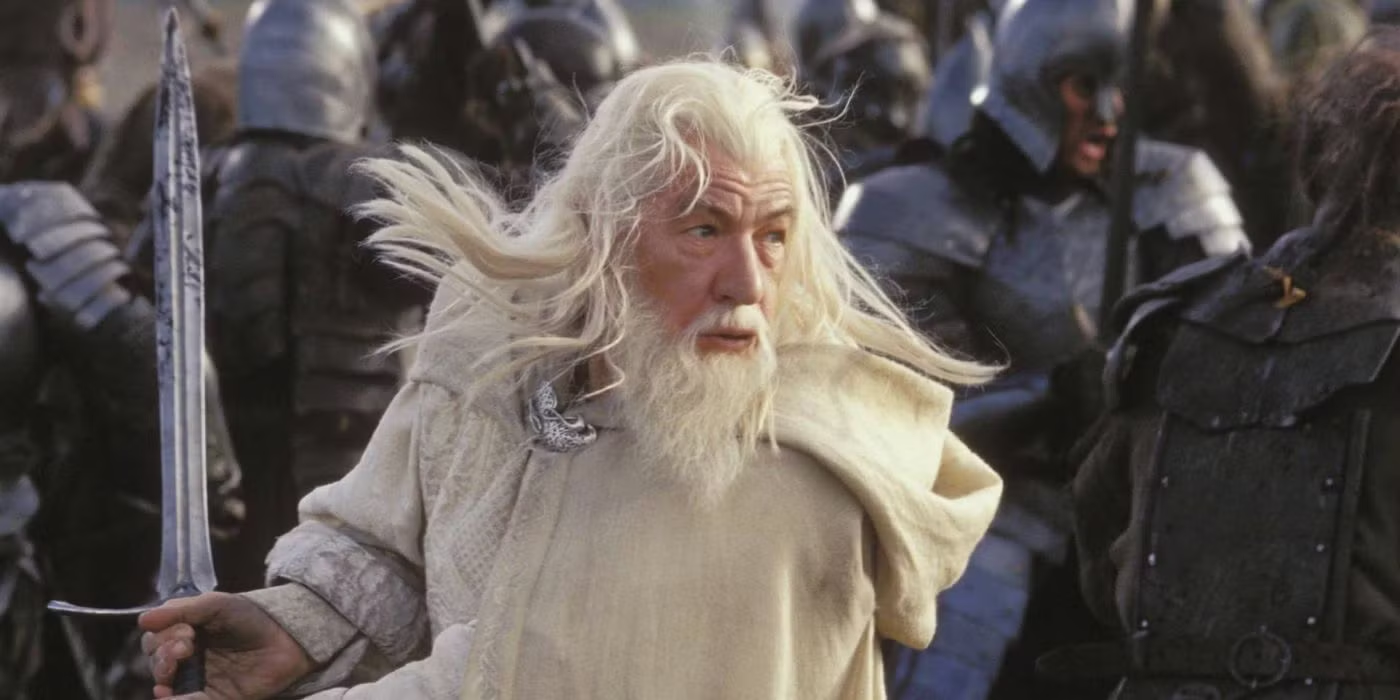
There is one scene from Peter Jackson's Lord of the Rings trilogy that keeps resurfacing whenever anyone compiles a list of fantasy cinema's greatest lines. It happens in the ruined city of Osgiliath, deep into The Two Towers, and it belongs to the hobbit everyone underestimates.
Frodo Baggins, played by Elijah Wood, is buckling under the weight of the One Ring by this point. The corruption is visible on his face. Sauron's shadow is spreading across Middle-earth, cities are falling, and Frodo has started to wonder whether any of it is worth the fight. That's when Samwise Gamgee, played by Sean Astin, steps in with the speech that has outlived the film itself.
"But in the end, it's only a passing thing, this shadow. Even darkness must pass. A new day will come. And when the sun shines, it will shine out the clearer," Sam tells him. "There's some good in this world, Mr. Frodo. And it's worth fighting for."
Collider recently ranked the line among the top fantasy quotes of all time, and it's not hard to see why the sentiment has stuck around for 24 years. It's not a battle cry. It's not a wizard dropping wisdom from a mountaintop. It's a gardener from the Shire, exhausted and scared, talking his best friend off the ledge.
That's really the throughline of the whole trilogy. The Fellowship of the Ring ends with the group scattered and Boromir dead. The Two Towers spends most of its runtime showing Sauron's armies rolling over everything in their path. And yet nearly every character finds a reason to keep going anyway. Elrond hands Aragorn a reforged sword despite believing men aren't worth saving. Merry and Pippin talk the Ents into joining a war they'd rather sit out. Faramir, who spends half the film chasing his father's approval, ends up letting Frodo and Sam go instead of dragging the Ring to Gondor.
Sam's speech just says the quiet part out loud. Hope isn't naive here, it's a decision people keep making even when the odds say don't bother.
What's kept the line alive isn't nostalgia alone. Astin's delivery is stripped of any big-speech theatrics, it sounds like something a friend actually says at 3 a.m. When the other one is falling apart. That's probably why it keeps landing on best-of lists more than two decades on, ahead of grander monologues from wizards and kings.
Jackson's trilogy wrapped its theatrical run back in 2003 with The Return of the King, and all these years later the films still anchor conversations about what fantasy cinema is supposed to feel like. Whether the next generation of the genre, on streaming or in theatres, produces a line that lasts this long remains the open question.



Be the first to comment
Join the argument. No password, just your email or a passkey.