The apex court issued a three‑point order demanding immediate sealing of businesses in residential‑only zones, flagging Bhopal’s lax enforcement and pending master‑plan overhaul.
Supreme Court handed down a three‑point directive on September 22 that sharpens the line between homes and shops. The bench told authorities to seal any premises that is found operating a business inside a zone marked only for living, to keep the status quo where land‑use classification is fuzzy, and to ignore ownership fights if the activity flouts the original plan.
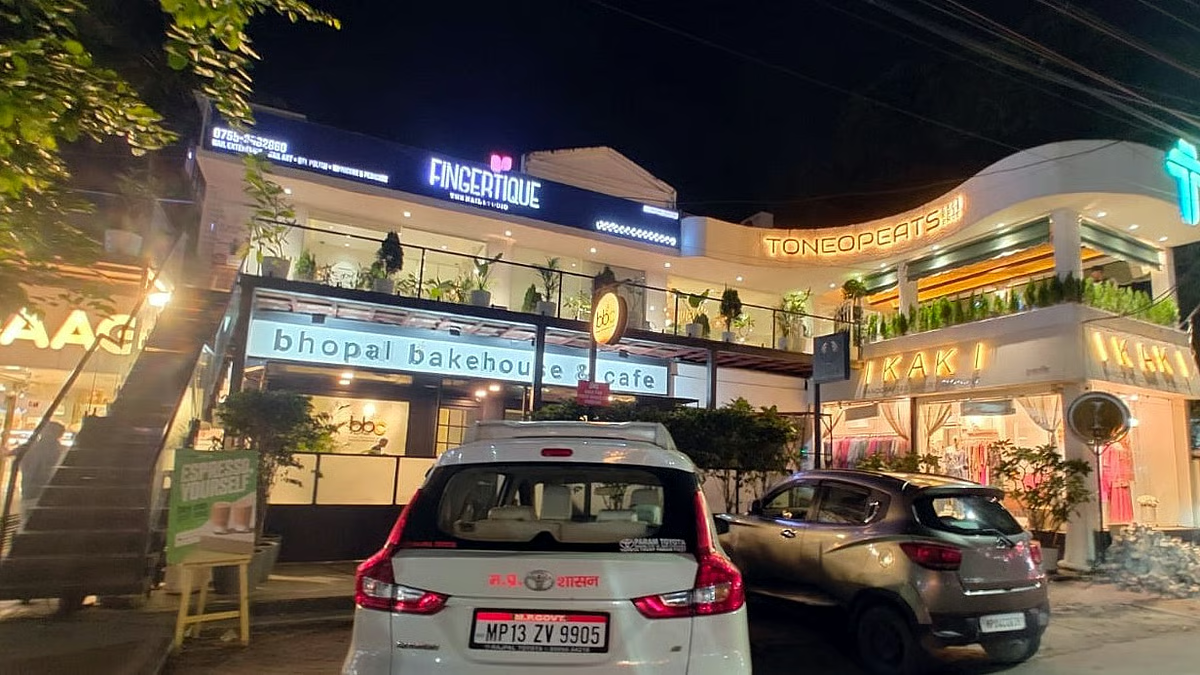
The order came while the court was hearing a case about illegal construction that spans several states, Madhya Pradesh featuring prominently. In Bhopal, petitioners complained that the municipal corporation has been lax – notices were sent, a handful of shops were briefly shut, then reopened within a day or two, often timed around festivals like Raksha Bandhan and Janmashtami.
Petitioners Purnendu Shukla and Vivek Tripathi argue that more than 45 days have passed since the court’s first set of directions after the August hearing, yet not a single illegal outlet remains sealed for any length of time. They say the corporation waited for a written order that arrived only last Friday, then flooded the city with over 8,000 notices, only to stall the actual enforcement.
The Supreme Court noted that Bhopal’s master plan has not been updated since 1995, a fact that complicates any attempt to label a plot as commercial or residential. While the state prepares a fresh draft master plan, the court made it clear that the old plan and existing building bye‑laws will continue to govern until the new one receives formal approval.
Urban development minister Kailash Vijayvargiya told the Free Press Journal that the upcoming master plan will address mixed‑use concerns and give some breathing room to traders who have been squeezed by the old rules. He hinted that the document could be published for public comment soon, but no timeline was offered.
What this means for everyday Bhopalites is a short‑term scramble. Shop owners who set up kiosks in residential lanes may find their stalls padlocked within hours, while those caught in a grey‑area of land‑use will have to wait for a court decision before any action is taken. Legal experts say the sealing order could trigger a wave of petitions, especially from those who argue that the old master plan is outdated.
Cities like Indore and Gwalior have watched Bhopal’s struggle closely, fearing that a similar crackdown could hit their own mixed‑use markets. Trade bodies are already urging the central government to issue a uniform guideline, arguing that piecemeal enforcement harms small entrepreneurs. If the Supreme Court’s clarifications hold, we could see a wave of sealing notices across the country, turning residential lanes into quiet corridors once more.
The court is slated to review compliance in a follow‑up hearing next month, giving the BMC a tight deadline to show tangible results.



Be the first to comment
Join the argument. No password, just your email or a passkey.