On his 61st birthday, Shah Rukh Khan’s legacy isn’t measured in awards or collections. It’s measured in memories — shared, repeated, passed down.
Shah Rukh Khan turned 61 on Tuesday, and Mumbai didn’t just mark the day with birthday wishes. It marked it with memory. The city, his home, felt like a stage where every street corner echoed a line from a film he’s starred in. At Mannat, fans gathered not just to see him — they came to stand where he stands, to feel the weight of what that house has become: not just a residence, but a monument to ambition.
A boy from Delhi with a suitcase full of dreams now lives in a building that feels like a promise. And for millions, that promise still holds. He’s been called many things, the King of Romance, the Sultan of Sentiment, the man who made us believe in love as a plot device.
But on this day, the conversation wasn’t about box office numbers or new projects. It was about how one man shaped an entire generation’s emotional grammar. His films weren’t just watched. They were lived.
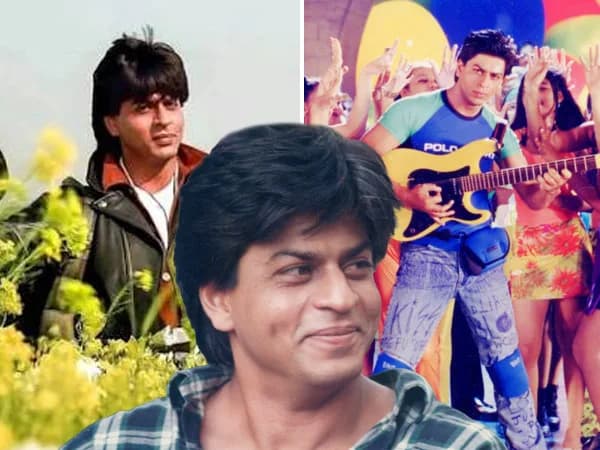
In homes across India, the same scene played out: a family huddled around a TV, the volume turned up during ‘Yeh Ladka Hai Allah’, someone whispering, ‘That’s how I want to be loved.’ The soundtracks weren’t just music. They were diary entries. Lyrics copied into notebooks, songs saved on cassettes, later downloaded with agonizing slowness, each file a declaration.
For those born in the late ’90s, SRK wasn’t just an actor. He was the reason you believed in butterflies. The reason you wrote your crush’s name in a notebook under a song title. The reason you once tried to wear a black leather jacket and hold a mandolin like it was destiny.
His masculinity wasn’t loud. It was soft. Emotional. Devoted.
In a time when Bollywood offered little space for vulnerability, he gave us a hero who cried, who waited, who said ‘Pyaar dosti hai’ like it was scripture. And we believed. Not because he was perfect. Because he wasn’t. He failed.
He got rejected. He lost. But he kept going. That’s the real magic.
Om Shanti Om wasn’t just a film about reincarnation. It was a sermon on second chances. And when he said ‘Picture abhi baaki hai’, it wasn’t just a line. It was a life philosophy.
Now, at 61, he’s still making people believe. Not in stardom. In possibility. The Black Lady sits quietly in Filmfare’s office.
Someone held it. Didn’t call it theirs yet. But the thought of it? That’s enough.
Because somewhere, a young girl is watching Om Shanti Om for the first time, and she’s thinking: Maybe I can have this too.
Be the first to comment
Join the argument. No password, just your email or a passkey.