The German top seed needed four sets to close out Flushing Meadows, picking up his second Grand Slam trophy of the year and a $5.5 million cheque.
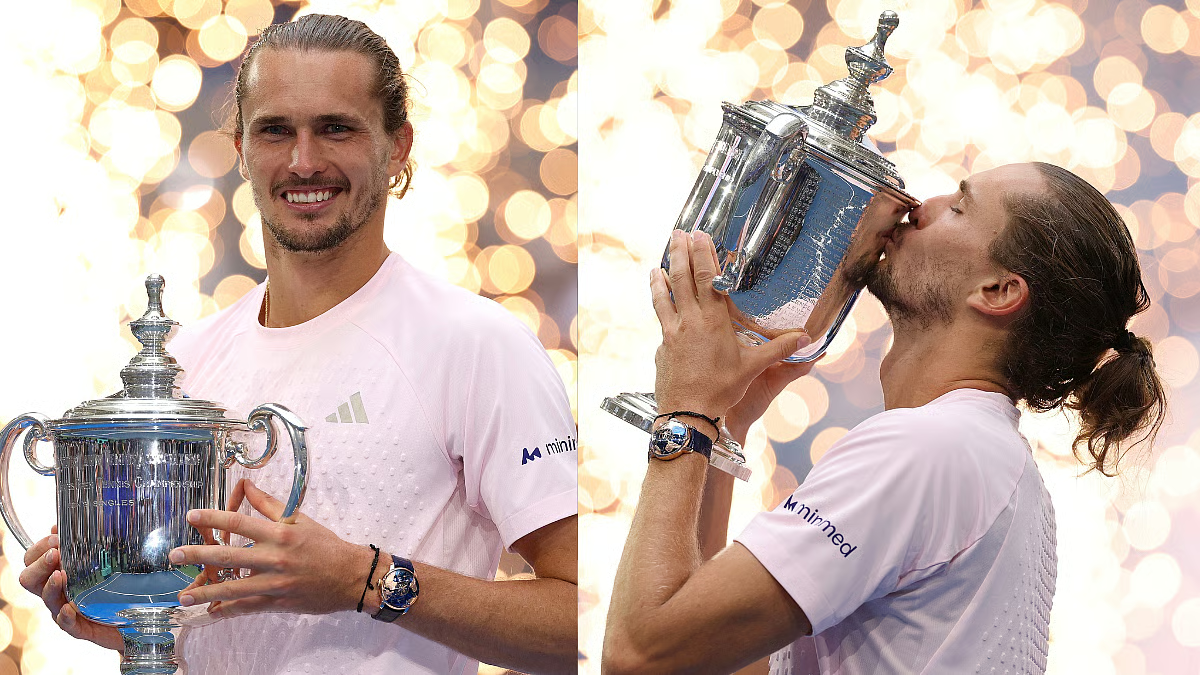
Alexander Zverev is a US Open champion now. The top-seeded German beat Ben Shelton 6-3, 7-6(2), 5-7, 6-2 on Sunday to win the men's singles title at Flushing Meadows, his second Grand Slam of the season after the French Open.
It wasn't a straight-sets stroll, even if the scoreline in the opening two sets suggested it might be. Zverev took the first set clean, then had to grind through a tight second-set tiebreak to go up two sets to none. Shelton, the eighth seed and the home favourite, wasn't done. He clawed back the third set 7-5 and had the crowd believing in an American fairytale for about twenty minutes.
Then Zverev reset. He broke Shelton twice in the fourth set and served it out without much fuss, finishing the match with nine aces and winning 85 per cent of points on his first serve. Numbers like that tend to decide finals, and this one was no different.
For Zverev, 29, this is about as sweet as redemption gets. He was two sets up in the 2020 US Open final against Dominic Thiem and still lost it, a collapse that followed him around for years on American soil. Six years later, he's walked out of Arthur Ashe Stadium with the trophy, the $5.5 million winner's prize, and two majors in a single season for the first time in his career.
That's the story of Zverev's 2026, really. A player who spent a long stretch being the best of the rest, forever the guy who made semis and finals against the sport's bigger names, has suddenly turned into the man collecting the biggest titles himself. Paris in the spring, New York in September. Whatever comes at the Australian Open and Wimbledon next year, he goes in as the man to beat rather than the dangerous outsider.
Shelton's run, even in defeat, keeps building his case as the next big American hope. He took a set off the best player in the world in a Grand Slam final and made him work for every point of the ones he did lose. At 23, with a serve that already troubles the tour's best returners, this isn't the last big final he plays.
Zverev, for now, gets to enjoy being a two-time Grand Slam champion in the same year, a first for him and a rare enough feat for anyone on the men's tour this decade. The conversation now turns to whether he can carry this form into 2027, starting with the hardcourt swing that follows.
Be the first to comment
Join the argument. No password, just your email or a passkey.