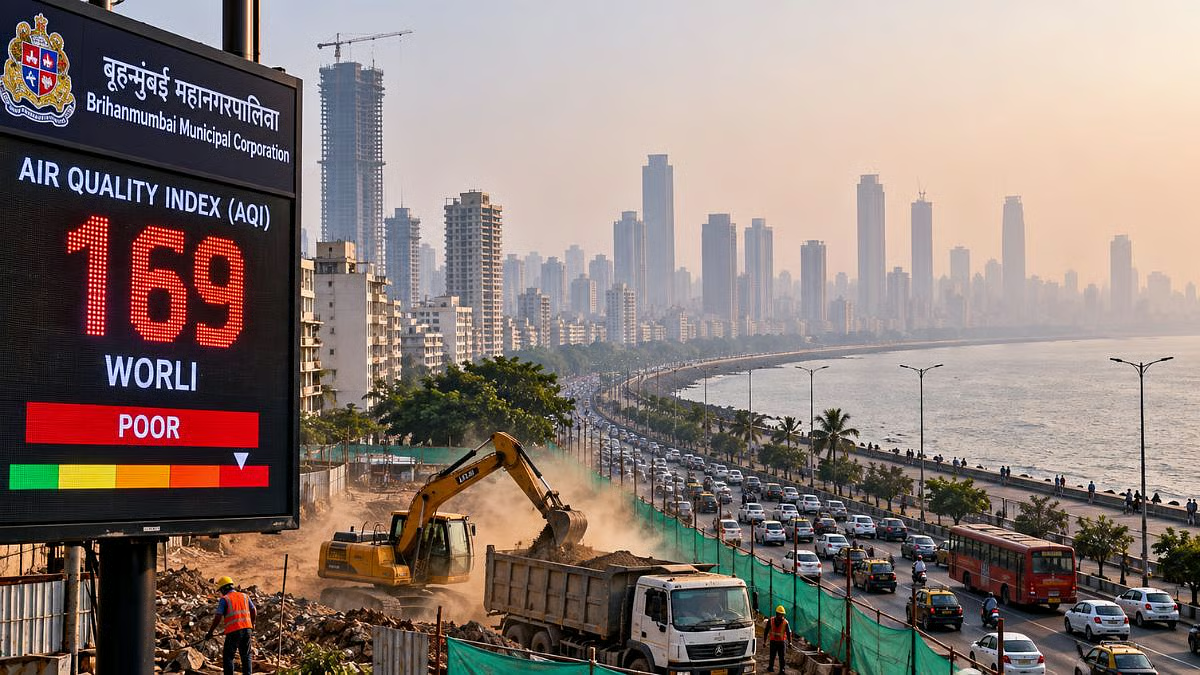
Mumbai's air hit 169 on Friday—Worli’s AQI the worst in the city. The BMC just unveiled its 2026 pollution crackdown, and it’s not playing around.
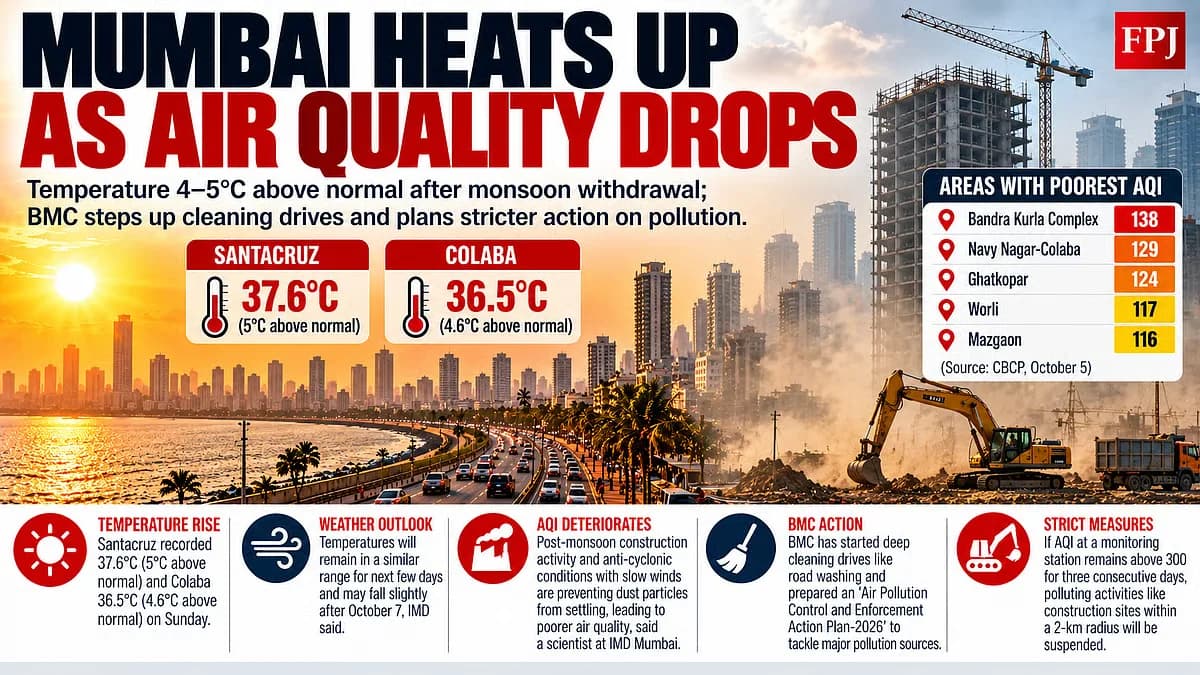
Mumbai’s air quality took a sharp dive on Friday, with Worli recording an AQI of 169 — the worst in the city, amid rising concerns over post-monsoon construction activity and stagnant air. The BMC has responded with its ‘Air Pollution Control and Enforcement Action Plan-2026’, a sweeping framework aimed at tackling pollution from major sources, particularly construction and demolition sites.
Under the plan, every ward will now identify at least ten pollution hotspots, covering areas like major infrastructure projects, open waste-burning zones, debris dumping locations, and traffic congestion points. Each hotspot will be assigned a designated officer for continuous monitoring. The civic body will enforce its existing 28-point guidelines for construction and demolition sites with renewed rigor.
Violators could face show-cause notices, stop-work orders, or even sealing of premises. Enforcement teams are directed to inspect at least two construction sites daily. Demolition sites must ensure proper barricading, cover debris with tarpaulin or green cloth, and carry out continuous misting to suppress dust emissions. To address accumulated mud and silt after monsoon rains, a Post-Monsoon Deep Cleaning Drive will begin during the first two weeks of October, focusing on major roads, medians, junctions, and road edges using recycled water or misting.
Developers and contractors will also bear responsibility for maintaining adjoining roads based on project size: up to 4,000 sq m projects must keep 100 metres clean, those between 4,000 and 10,000 sq m must cover 200 metres, and projects exceeding 10,000 sq m will be responsible for cleaning up to 500 metres on either side. Vehicles transporting construction and demolition waste must be fully covered, with wheels cleaned before entering public roads.
Movement and disposal of debris will be tracked via the Mumbai Debris Control and Tracking System (MDCTS). Ready-mix concrete (RMC) vehicles must operate without spilling material onto roads. Open burning of waste in vacant spaces will face intensified action, supported by ward-level marshals and CCTV surveillance. Special Pollution Under Control (PUC) checks will be conducted on high-traffic routes and congestion-prone stretches, with vehicles emitting visible smoke subject to penalties.
The BMC will monitor AQI continuously and implement measures under the Graded Response Action Plan (GRAP) depending on severity. If AQI exceeds 200, additional actions like intensive cleaning, road washing, water sprinkling, and stricter enforcement against open burning will be activated. Should AQI remain above 300 for three consecutive days at any station, polluting activities within a 2-km radius will be suspended.
Implementation will be reviewed regularly at the ward level, with assistant commissioners across all administrative wards tasked with ensuring strict adherence. The plan was issued under the guidance of Mayor Ritu Tawde, Deputy Mayor Sanjay Ghadi, and Municipal Commissioner Ashwini Bhide. Additional Municipal Commissioner (Eastern Suburbs) Dr Avinash Dhakane has directed civic officials to take preventive and enforcement action against key pollution sources across Mumbai.
As of Friday evening, only 19 out of 30 monitoring stations were active, raising questions about data reliability. The real test lies ahead: can the city’s machinery hold developers, transport operators, and local authorities accountable? The clock is ticking. Next step: see how many violations survive the first week of enforcement.
Be the first to comment
Join the argument. No password, just your email or a passkey.