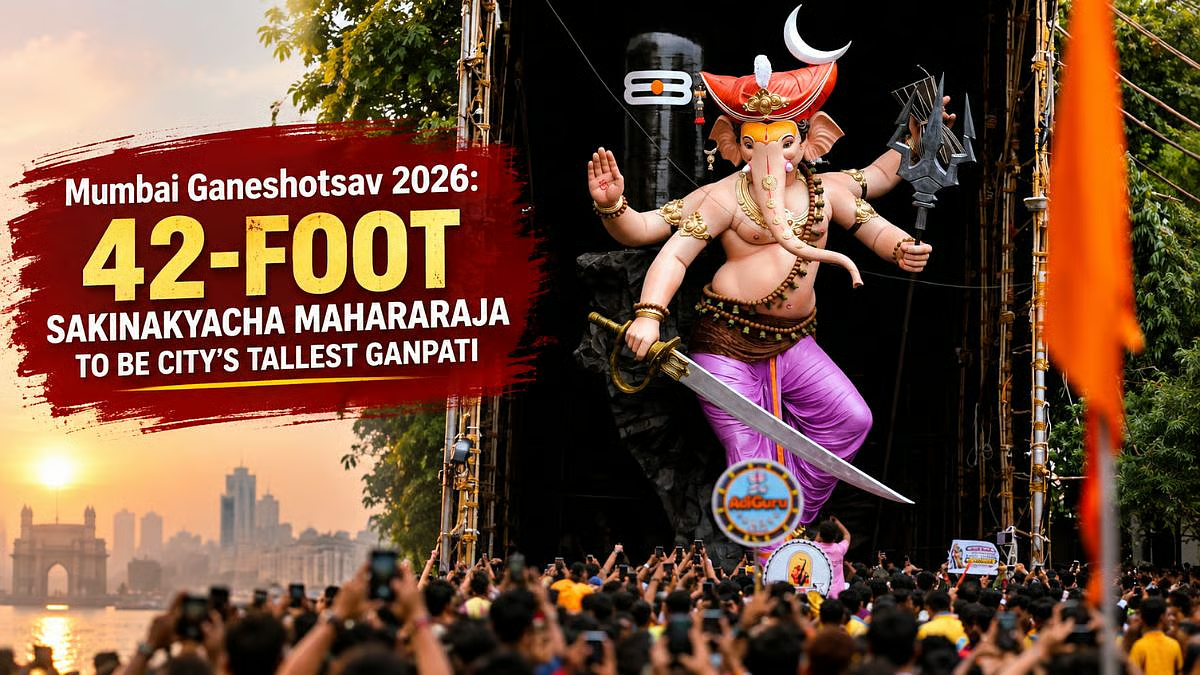
Sakinakyacha Maharaja stands 42 feet tall this year, and with two deaths already reported during arrival processions, mandal leaders want the state to finally enforce a binding height limit.
Sakinakyacha Maharaja arrived at its mandap last week in a procession fit for its size, all 42 feet of it, making it the tallest Ganpati idol in Mumbai this Ganeshotsav. It won't be the only giant on the streets. Mandals like Khetwadi cha Raja have long competed on scale, and that race has real costs.
Three tall sarvajanik idols have already toppled during arrival processions this year. Two people died. Around ten were injured. Naresh Dahibavkar, president of the Brihanmumbai Sarvajanik Ganpati Samanvay Samiti, called the toll concerning and said the coordination body has issued fresh safety guidelines ahead of visarjan.
The bigger worry is what happens on immersion day, when these idols actually go into the water.
A senior BMC officer involved in visarjan planning laid out the problem plainly. Tree branches, power cables, bridges, trolley breakdowns mid-transport. Every added foot of idol makes each of these worse. At sites like Girgaum Chowpatty, which handles the highest volume of immersions in the city, trolley failures before reaching the shore have already caused chaotic scenes, the officer said, and moving a tall, heavy idol once it stalls takes time first responders don't always have.
Some of the fixes are almost improvised. Mandals have removed crowns, turbans and decorative stands mid-procession just to shave off height and weight so an idol can clear an obstacle. Because many of the tallest idols get moved only after high tide, volunteers and coastguard personnel end up wading far out to sea, sometimes at midnight, to complete the immersion. Taller idols also draw bigger crowds, which means the safety and crowd-management job grows on both fronts at once.
There's a wrinkle specific to this year's tallest entrant too. Sakinakyacha Maharaja will likely be immersed at Powai Lake, the nearest site to its mandap, and the BMC officer flagged that the lake isn't especially deep for an idol of this size.
None of this is new, exactly. The BSGSS actually passed a resolution back in 2008 capping Ganpati idol height at 18 feet, and mandals initially agreed to it. That truce didn't hold. By 2012, several mandals with decades of tradition behind them had gone back to building tall, and the unofficial competition for the city's biggest idol was on again. Dahibavkar wants the state government to step in this time with a committee and a resolution that actually binds every sarvajanik mandal, not just the ones willing to play along.
The Sakinakyacha Maharaja mandal, for its part, says it works closely with police and the civic body precisely because of its idol's height, with overhead wires cleared or raised well before visarjan day, according to mandal secretary Jack Jikamade.
Whether that cooperation extends citywide, and whether Mumbai gets through this year's immersions without another fatality, plays out over the coming visarjan days.
Be the first to comment
Join the argument. No password, just your email or a passkey.