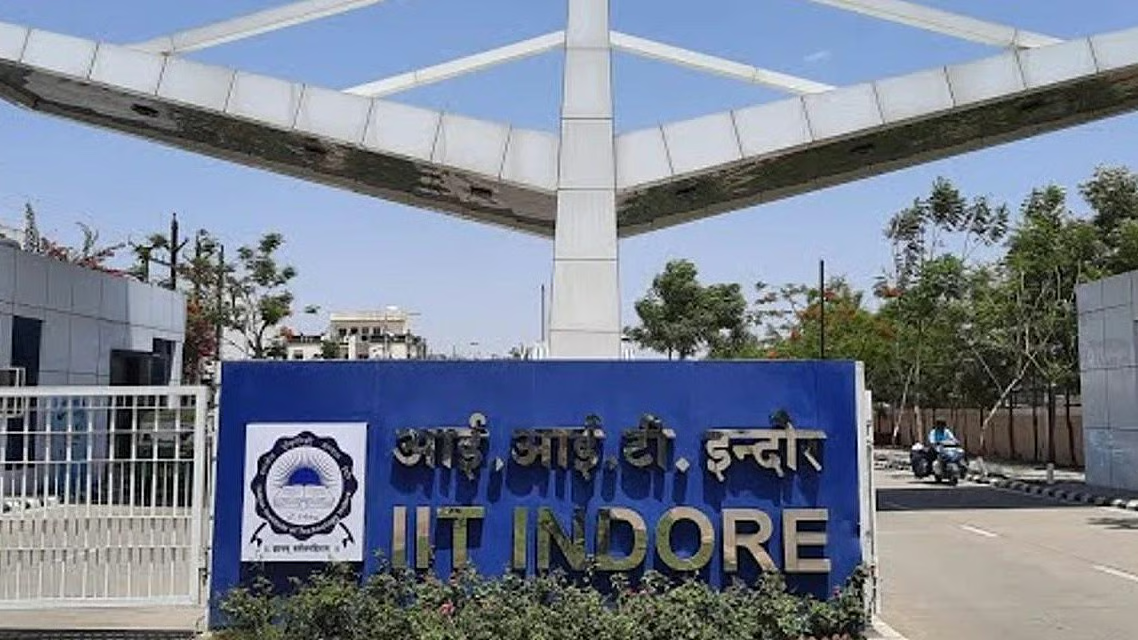
HydroVerse AI, built by a lab at IIT Indore, beat out more than 150 entries nationwide to reach the final round of a NABARD-backed climate challenge.
An IIT Indore lab just beat out more than 150 rivals to land a spot among the top 11 finalists of a national climate-tech contest, and the tool it built might end up telling Madhya Pradesh's farmers when a flood or a drought is coming years before it hits.
The Water, Climate and Sustainability Lab at IIT Indore has advanced to the finals of the National Climate Stack Innovation Challenge, or NSIC 2026, organised under NABARD. The institute first made it through a shortlist of 20 before reaching the final 11 with a working prototype called HydroVerse AI.
Think of it as an early-warning system built on data instead of guesswork. HydroVerse AI runs artificial intelligence and machine learning over satellite observations, climate datasets and CMIP6 climate projections to forecast floods, droughts, heatwaves and stress on crops, right down to the district level. The idea is to hand farmers, policymakers, disaster teams, banks and researchers something they can actually act on, not just another report nobody reads.
The team has already run the prototype across every district in Madhya Pradesh, using historical data alongside projections that stretch out to 2040. It spits out hazard maps, risk indices, forecasts and advisories meant to guide everything from climate-smart farming to water management and disaster planning. And the lab says the same framework can be extended to other states once it's folded into the wider National Climate Stack ecosystem.
IIT Indore director Prof Suhas Joshi called the top-11 finish "a proud moment for IIT Indore," adding that HydroVerse AI shows how new technology can be pointed at real problems to make the country more climate-resilient. He credited Prof Manish Kumar Goyal, who leads the project, for turning academic research into something with on-the-ground use.
Goyal, for his part, framed the platform as a bridge between climate science and everyday decision-making. "HydroVerse AI brings together AI and climate science to turn complex data into actionable, localised climate intelligence," he said, adding that the NSIC recognition is "an encouraging milestone" toward scaling the technology further.
The project isn't a one-person show. Alongside Goyal, the team lists Vishal Gautam, Dr Srija Roy, Dr Kuldeep Singh Rautela and Dr Vinod Kumar Sahu.
What happens next depends on how NSIC 2026 shakes out among the remaining finalists nationally, and on whether NABARD or state governments decide to actually deploy something like this at scale. For now, HydroVerse AI has cleared one hurdle. Turning a validated prototype into a tool farmers in Madhya Pradesh rely on every season is the harder one.


Be the first to comment
Join the argument. No password, just your email or a passkey.