The filmmaker revisited the 2016 film's divisive third act and said he would tell the one-sided love story the exact same way if he made it today.
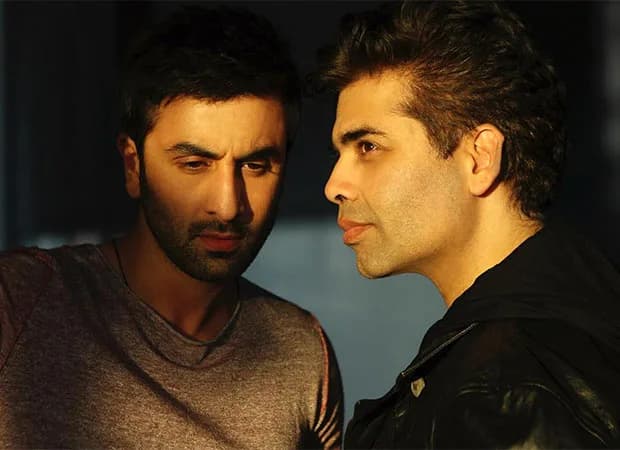
Ten years to the day since it opened in theatres, Ae Dil Hai Mushkil got a reflective send-off from the man who made it. Karan Johar posted a video montage on Instagram on Wednesday, stitched together from the 2016 film, and attached a note that read less like a press release and more like a diary entry.
The film released on October 28, 2016, with Ranbir Kapoor and Anushka Sharma in the lead, Aishwarya Rai Bachchan and Fawad Khan in pivotal roles, and Lisa Haydon rounding out the main cast. Alia Bhatt and Shah Rukh Khan showed up in special appearances. It told the story of one-sided love, a theme that split audiences then and still comes up whenever the film gets discussed.
Johar didn't dodge that history. He called the film "a cumulation of many pieces of my pursuits of love and longing and perhaps also many of my own heartbreaks," and said the idea for it came from a vulnerable stretch in his own life, one where he decided that love not being returned didn't make it worth less. "You don't need to have someone love you back to empower yourself," he wrote, "the feeling itself is so awakening and so so powerful!"
The third act, again
Ae Dil Hai Mushkil's ending has been argued over since the week it came out, and Johar used the anniversary to address that directly rather than sidestep it. "I do admit that it wasn't without its flaws and had several polarised responses... Especially to its third act," he wrote, before adding that he'd make the same choices now. "BUT truth be told I would have still told it the same way even today, with its flaws... With its perceived imperfections..."
He followed that with a line that's going to get quoted a lot over the next few days: "No art can be perfect and all interpretation is welcome but conviction has to trump all logic and sensibility when you want to be an unabashed story teller."
There was also a short riff on what Johar thinks real love should look like, selfless rather than self-centred, which read as an extension of the film's own thesis rather than a separate thought. "We as a community of lovers have to disassociate the 'I' in 'I LOVE YOU'," he wrote. "Selflessness is where true love truly resides..."
The note closed with thanks to his cast, a nod to the on-set atmosphere he called the perfect "Vatavaran," and a line lifted straight from the soundtrack: "Accha chalta hoon... Duaon mein yaad rakhna..."
No new project, no sequel talk, nothing transactional here. Just a filmmaker marking a film that still gets people arguing a decade later, on the day it turned ten.

Be the first to comment
Join the argument. No password, just your email or a passkey.