Nearly a year after Prada's Milan runway sparked outrage, Maharashtra's artisan economy is still waiting to see whether recognition turns into actual income.
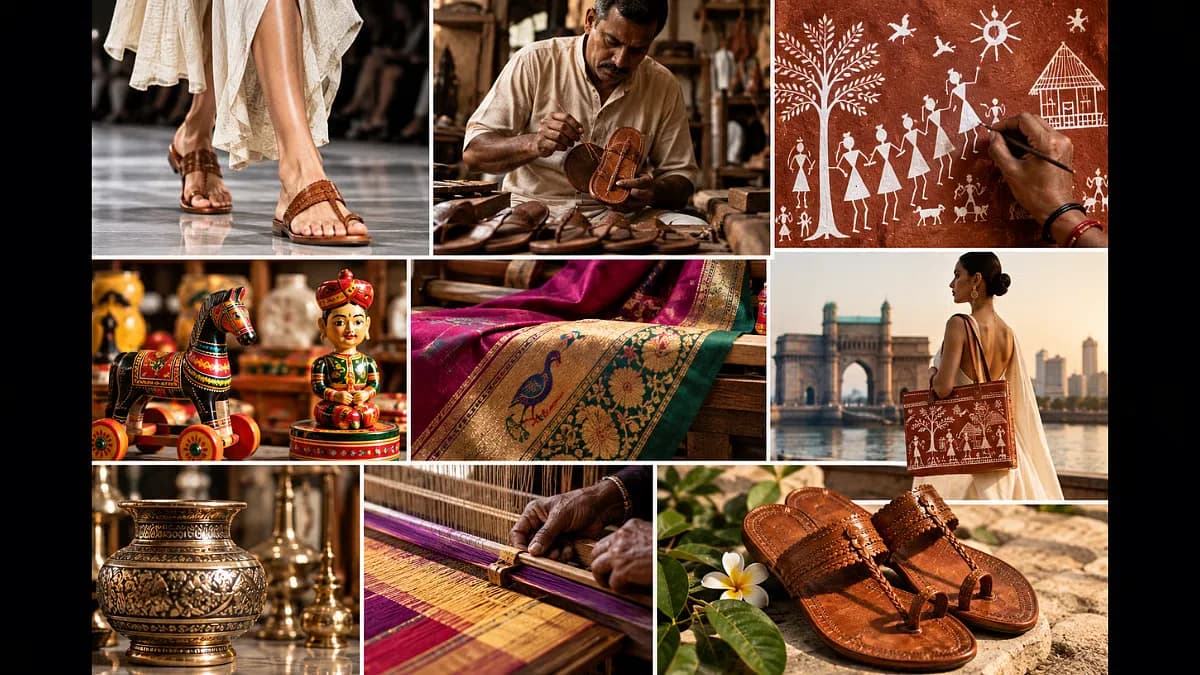
A pair of sandals on a Milan catwalk did more for Kolhapuri chappals than seven years of a Geographical Indication tag managed on its own.
When Prada showed footwear that looked unmistakably like the Kolhapuri chappal at its Spring/Summer 2026 show, the resemblance didn't stay a fashion-week footnote. It turned into a fight about who gets credit, who gets paid, and why a craft can win global admiration in Milan while the people making it back home still struggle to sell it at a fair price. Prada eventually acknowledged the inspiration. By then the story had already outgrown the runway.
Kolhapuri chappals got their GI tag in 2019, the kind of legal recognition that's supposed to protect a craft's identity and, in theory, its value. According to reporting in the Free Press Journal, that protection hasn't translated into economic security. Artisans across Maharashtra are still up against machine-made knockoffs, thinning incomes, and almost no direct route into national or international markets. A GI certificate on paper doesn't stop a factory somewhere from churning out a cheaper look-alike.
Recognition isn't the same as a paycheque
Jewellyn Alvares, who heads the fashion and costume design department at Whistling Woods International, put the artisan at the centre of the argument. Maharashtra's handicrafts, she said, have real potential as globally recognised luxury products, but that potential only holds if the people making them actually benefit. Fair wages, ethical partnerships, policy backing and stronger IP protection, in her view, aren't optional extras. They're the whole point.
Nelson Jaffery, who leads design at Liva, framed the moment differently, pointing to a shift in what buyers actually want. Consumers aren't just buying a label anymore. They want to know who made the thing, how, and whether the process was fair to that person. Social media has fed that curiosity, he said, turning provenance into part of the product itself.
But Jaffery was blunt about where most brand-artisan tie-ups fall short. Too many collaborations are one-off capsule drops or seasonal campaigns, generating a burst of visibility and nothing that lasts. What actually moves the needle, he argued, is continuity. Long-term partnerships. Fair pay that doesn't reset every season. Training and co-design, not just a licence to use a motif. Treat artisans as partners instead of suppliers, and you get durable crafts and durable jobs, not a photo op.
Designer Ranjit Rodricks made the simplest case of all. Anything handmade already qualifies as luxury, he said, especially when it carries generations of technique behind it. Maharashtra isn't short on that history, whether it's Warli painting, Sawantwadi's wooden toys or Ganjifa cards.
What's missing, going by all three, is the infrastructure to convert admiration into income. A GI tag is a start, not a finish line. The next test is whether any brand doing business off Kolhapuri's name is willing to put money and market access behind the artisans who actually made the craft worth borrowing.


Be the first to comment
Join the argument. No password, just your email or a passkey.