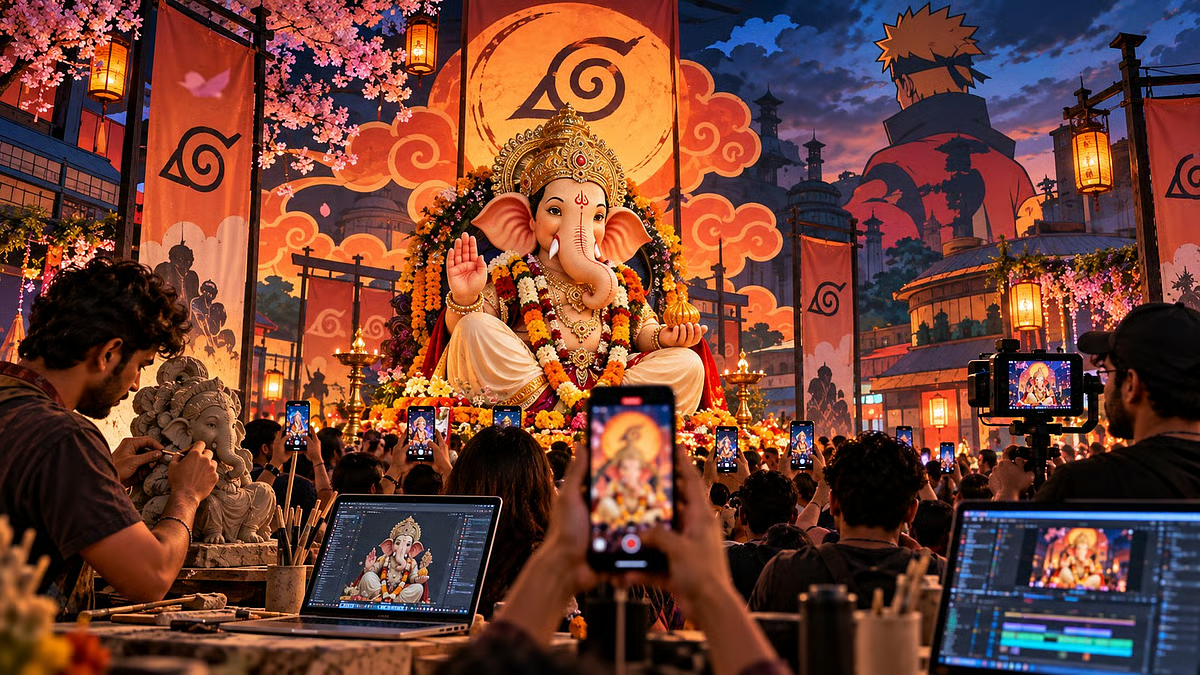
Murtikars are fielding requests for Naruto-style poses and slow-motion aagman videos as mandals hire media managers to chase views alongside blessings.
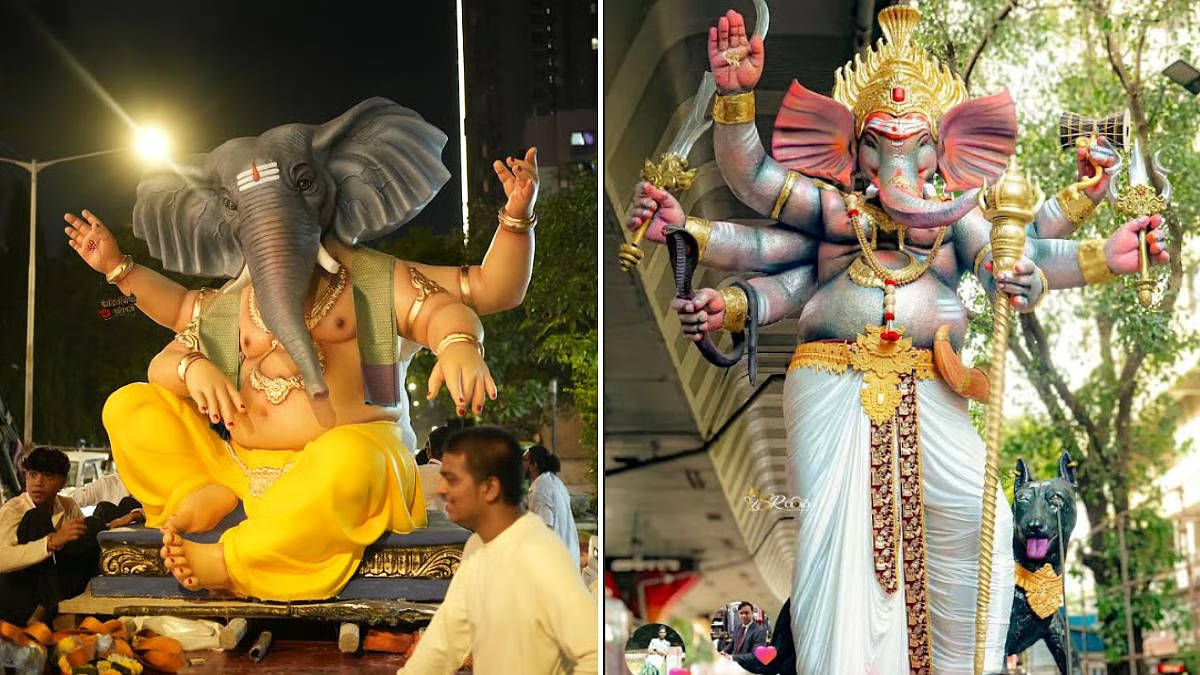
A single reel of Chinchpokli Cha Chintamani crossed 2.5 million views on a content-tracking platform before the festival had even peaked. Scroll #Mumbaiganeshutsav and you'll find idols that look nothing like the ones from a decade back, some styled with anime-inspired faces, some staged for slow-motion aagman videos built for Instagram Reels rather than a neighbourhood pandal.
This is the version of Ganeshotsav playing out in 2026, one where the murtikar and the content creator are increasingly the same conversation.
From family craft to screen references
Idol-making used to pass down through watching an older sculptor work, hands on clay, nothing else. Second-generation murtikar Naresh Kumar Kumawat says that's shifted. "Younger customers often come with references, asking for different postures, expressions, colours or themes," he says, adding that social media has widened what people expect from a single idol. He's clear that a screen image is only a starting point though. "The face and expression are where the artist's own touch becomes visible."
24-year-old Mumbai artist Kartik Agarwal calls it a genuine shift in process. Earlier, translating an unusual look into clay meant guessing. Now you build references, test poses, tweak digitally before anything is sculpted. His one rule: don't just lift the screen image. "You reinterpret it for Bappa," he says. 3D moulds and AI-generated visuals speed up experimentation, but Kumawat insists the judgement that happens once material is actually in a sculptor's hands can't be automated.
Mandals are now media houses
At Best Nagar Ganeshotsav Mandal, marketing head Kshitij Shirodkar puts it bluntly: presentation now decides standing. "A good social media mandal always gets better sponsorship chances than a dormant one," he says. Teams increasingly include a media manager and an editor. Even darshan gets treated as content, filmed so people who can't attend can watch it play out later.
Pune resident Smriti Gupta, 34, describes how this changes the actual experience of visiting. You discover a mandal on Instagram, plan the visit around it, shoot there, then watch someone else's version of the same evening afterward.
Sponsorships have followed the shift, with branded videos, watermarks and reel integrations now standard. AI also shows up in invitations, greeting cards and decoration planning, and some mandals lean on tech purely for crowd management.
Not everybody's sold. Rekha Sharma, 56, sees the energy but flags a worry. "I wonder whether we are becoming more interested in how Bappa looks on the phone than how we feel when we stand in front of him," she says.
There's a materials shift running parallel to the digital one. LED backlighting, artificial flowers and reusable PVC foam are in demand, and eco-friendly makhars are replacing thermocol. Healthcare expert and environmentalist Dr Sujit Paul Zota warns that greener choices, natural clay especially, cost more and take longer to dry, so the transition needs training and fair pricing behind it or artisans absorb the hit alone.
At Best Nagar, the newer tools are being pointed at older intentions. This year's presentation focuses on responsible tourism, following 2025's freedom-fighter theme that got the mandal an appreciation letter from the BMC. Pooja Raut, 29, thinks that's the test worth watching. "If AI, reels or digital design help us tell a meaningful story and keep young people connected to Bappa, they are useful," she says. "But if everything becomes about getting views, the festival loses some of its soul."
Whether that balance holds through visarjan week is the thing nobody here has quite answered yet.
Be the first to comment
Join the argument. No password, just your email or a passkey.