AI is turning selfies into 1970s Indian memories — and no filter is safe.
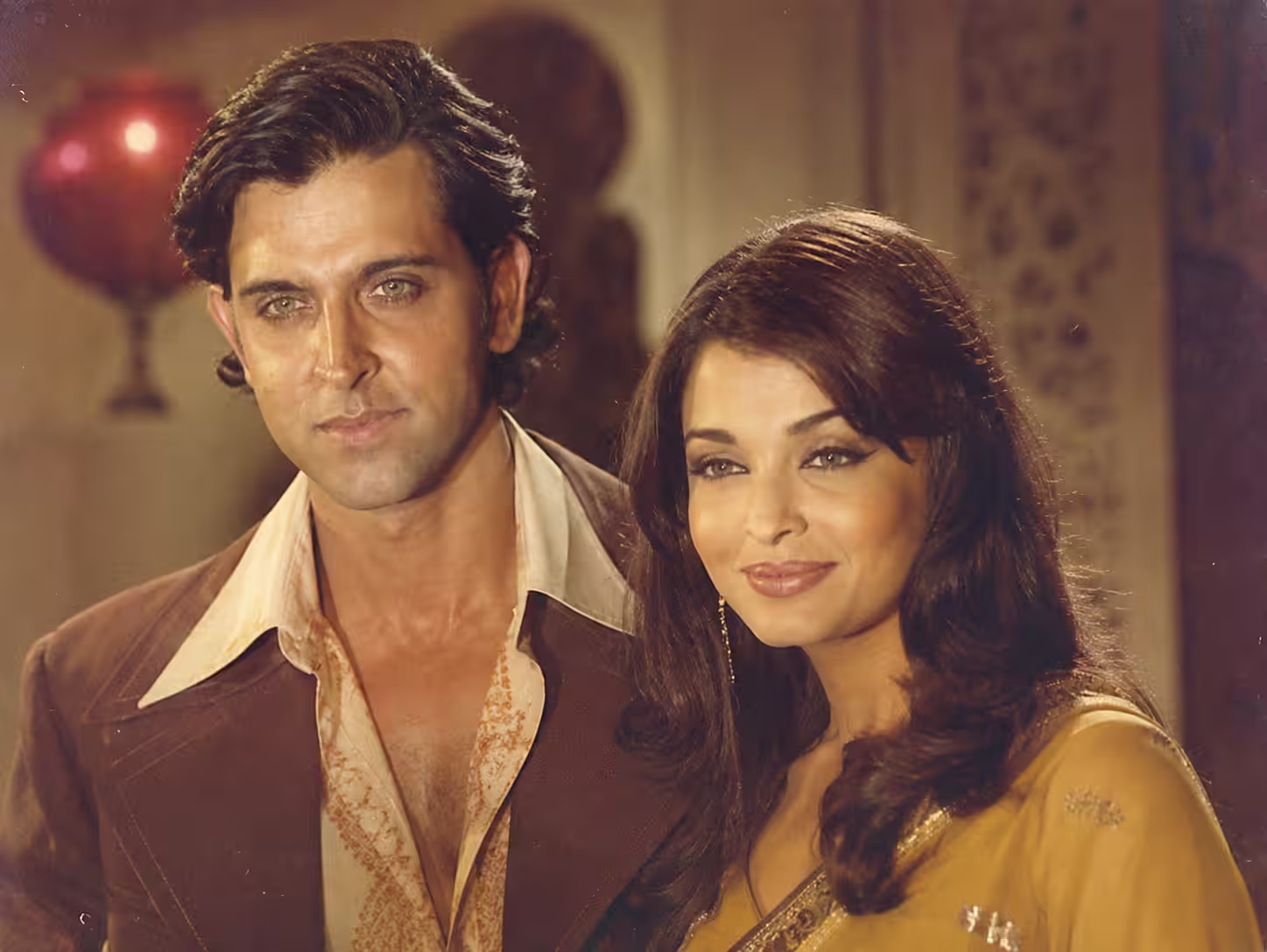
The 1970s are back — not in history books, but in your Instagram feed. With a flick of an AI prompt, anyone can now turn a modern selfie into a faded studio portrait from mid-century Bombay, a family album relic, or a candid street shot from the era when Bollywood ruled the reels and film grain was king.
The trend, already sweeping across India’s digital spaces, is built on one simple truth: people aren’t just nostalgic for the past, they want to live in it, pixel by pixel. It started with the 80s. Then came the 90s. Now, the internet has skipped ahead to the decade that birthed Raj Kapoor’s dreamy epics and Amitabh Bachchan’s brooding intensity.
But this isn’t about rewatching old films. It’s about becoming them. Using tools like ChatGPT and Google Gemini, users are feeding their photos into AI systems with precise, cinematic instructions. Not just “make it vintage.” No. The magic lies in specificity: “authentic 1970s Indian clothing,” “warm flash photography,” “slight yellowing,” “subtle scratches,” “period-accurate architecture.” The result?
A photo that doesn’t just look old. It feels like it survived a monsoon, a dust storm, and a family argument. There are five go-to prompts doing the rounds. One turns you into the lead in a lost Bollywood film, earthy tones, soft focus, light leaks.
Another drops you into a 1975 Bombay street scene, where a Tata Sierra might be parked beside a chai wallah’s cart. There’s even a version for wedding photos that makes today’s bridal glam look like a memory from someone else’s life. And yes, the same set of prompts appears in both Kannada and Tamil entertainment sections of the Times of India.
Coincidence? Unlikely. The trend isn’t regional. It’s pan-Indian.
The 1970s didn’t belong to one language industry. They belonged to a shared visual grammar. The kind that still lives in every uncle’s album, every faded poster, every frame that never made it to the big screen. But here’s the twist: the more perfect the image, the less real it feels.
The secret sauce? Imperfection. Slight grain. Uneven exposure.
Dust on the lens. That’s what separates a filter from a memory. So if your phone’s gallery suddenly looks like a time capsule, don’t panic. You’re not losing your grip on the present.
You’re just borrowing a little of the past, and letting AI do the heavy lifting. The next question? Who’s going to make the first real 1970s-style film using these images as reference? And will it be a remake… or a reboot?

Be the first to comment
Join the argument. No password, just your email or a passkey.