A split‑image painting by Ukrainian artist Oleg Shupliak is being shared as a quick personality quiz, though scientists say the claims lack any real basis.
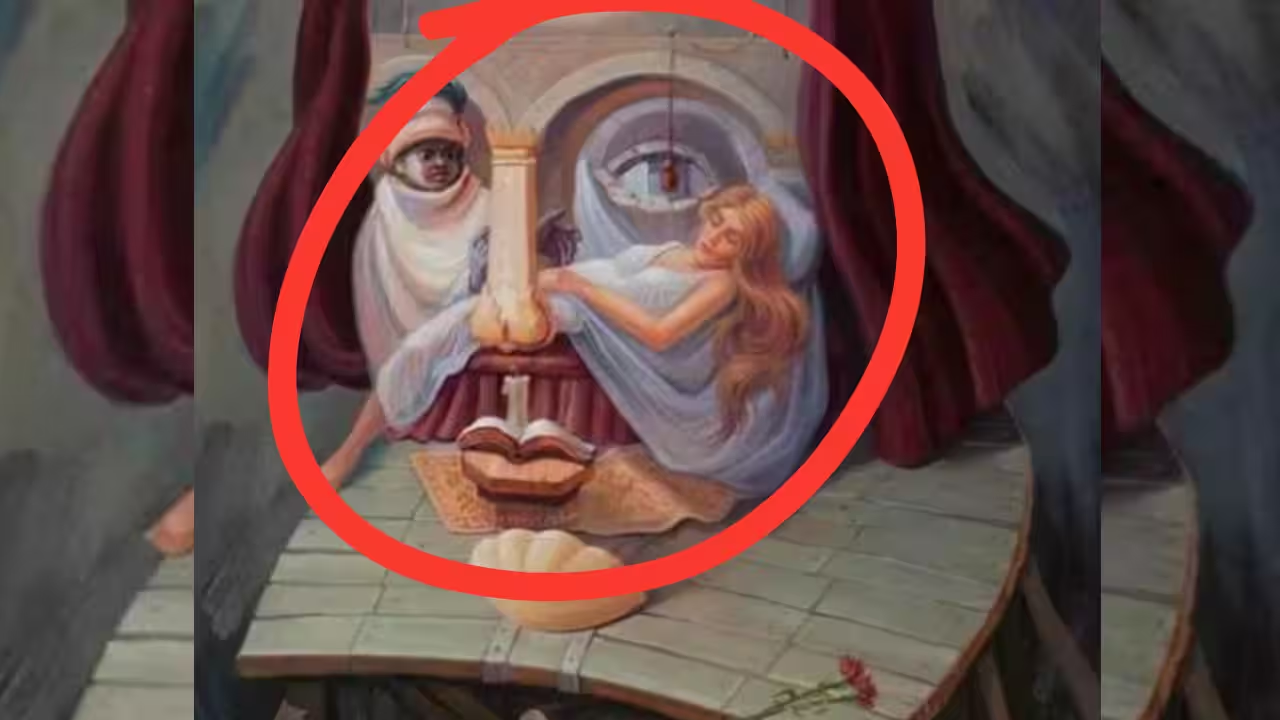
A painted illusion that hides a portrait of William Shakespeare inside a theatrical scene is circulating as a rapid‑fire personality quiz. The image, part of Ukrainian artist Oleg Shupliak’s “Hidden Images” series, appears on Instagram stories and WhatsApp forwards, prompting users to answer the question: what did you notice first?
What the Test Says
According to Times of India, the test claims that spotting Shakespeare’s face first signals strong self‑awareness and confidence. The narrative goes on to suggest that such people know their strengths, are decisive, and rarely second‑guess their choices. The opposite reaction – seeing the surrounding stage elements before the playwright – is said to point to an over‑thinking mindset that dwells on details and hesitates to act.
The premise hinges on the brain’s habit of filling gaps and forming snap judgments. The article notes that while the concept is entertaining, there is no scientific research backing the personality read‑outs. Psychologists stress that a single visual cue cannot reliably map complex traits like confidence or over‑analysis.
The illusion itself is a clever visual trick. At first glance, the composition looks like a generic theatrical backdrop, but a closer look reveals Shakespeare’s profile cleverly embedded within the brushstrokes. Viewers report a split reaction: some swear they saw the bard instantly, while others claim the surrounding scenery grabbed their attention.
Social media users have turned the test into a quick ice‑breaker. Friends post screenshots, challenge each other, and tag the original artist for credit. The simplicity of the format – a single image and a binary answer – makes it perfect for group chats and office break‑rooms. Even though the claims are unverified, the activity fuels light‑hearted conversation about self‑perception.
Critics, however, caution against taking the results at face value. The Times of India article explicitly mentions that the test lacks empirical support, labeling it more as a fun conversation starter than a diagnostic tool. In a world saturated with personality quizzes, this illusion joins a long line of pop‑psychology trends that thrive on shareability rather than rigor.
For now, the debate remains online. Some users swear by the test’s accuracy, citing personal anecdotes that align with the described traits. Others dismiss it as a clever marketing gimmick, noting that any binary outcome can be retrofitted to fit one’s self‑image.
Whether you see Shakespeare first or not, the illusion points to how quickly our brains latch onto familiar shapes. It also reminds us that viral content can spread faster than the facts that support it. As the image continues to ripple through chats and feeds, the next wave of reactions will likely keep the conversation alive, even if the underlying science stays out of the frame.




Be the first to comment
Join the argument. No password, just your email or a passkey.