The film that wants to be a statement ends up being a footnote.
Singgaramm isn’t a film that wants to be seen. It wants to be understood. And that’s the first problem. The second?
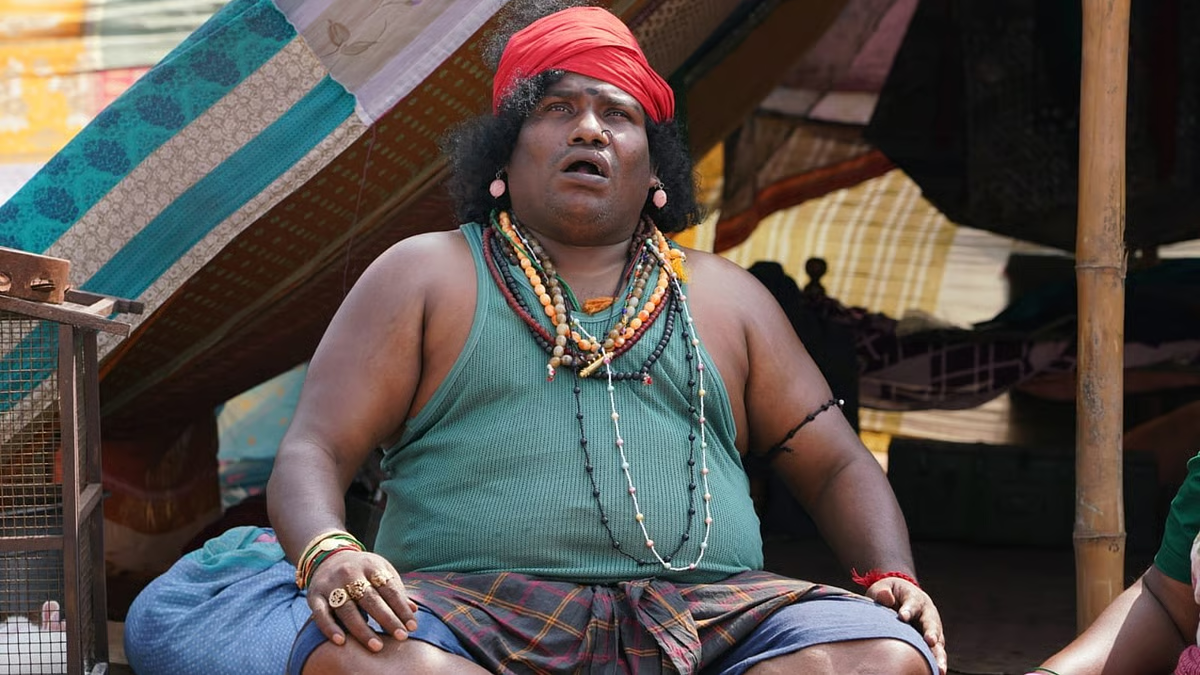
It doesn’t know what it’s trying to say — only that it must look like it does. A Tamil drama with ambitions beyond its reach, it arrives with all the weight of a manifesto and the emotional heft of a PowerPoint presentation. Yogi Babu plays Singgaramm, a Narikuravar man who, after years of wandering, settles in a village where the land is dry, the ration queues are longer than his patience, and the local power structure treats him like an afterthought.
He’s not a leader. Not yet. But the film insists he will be. So it hands him a lottery win, a white-saviour oor thalaivar (Vela Ramamoorthy), and a sudden epiphany about democracy, all in under two hours.
No struggle. No strategy. Just fate, delivered by coincidence. The film’s entire arc hinges on a single, unearned leap: from beggar to candidate.
There’s no build-up. No internal reckoning. Just a line of dialogue aimed straight at the camera: “Power isn’t given. It’s taken.” As if the audience needed a lecture.
The real issue isn’t the message, it’s the method. The film spends more time explaining why it matters than showing how it hurts. It inserts a short animated documentary on the Narikuravar warrior past, not because it fits, but because it must. Because otherwise, how would we know they’re noble?
How would we feel for them? The answer: we wouldn’t. Not without the director’s hand guiding us through every beat. The characters aren’t people. They’re symbols.
Yogi Babu speaks in his usual cadence, like he’s still in a comedy, and it clashes violently with the solemnity the film demands. Vela Ramamoorthy tries, but even his gravitas can’t save lines that sound like they were written for a political ad. MS Bhaskar and Ilavarasu do their best, grounding the film in quiet sincerity.
But sincerity isn’t enough when the story lacks momentum. The film’s final act abandons fiction entirely. Credits roll. Then, news clips.
Real footage of real Narikuravars. A shift so abrupt it feels less like closure and more like surrender. This isn’t storytelling. It’s apology.
Or worse: performance. The film wanted to be a socio-political drama. Instead, it became a checklist: oppression, trauma, savior trope, institutional failure, community pride. All ticked off.
None felt. The only thing that’s clear? Singgaramm wasn’t made to move you. It was made to be seen as something important.
And that’s not a crime. But it’s a waste.
Be the first to comment
Join the argument. No password, just your email or a passkey.