The Series 12 and Watch Ultra 4 now sample heart rate every five seconds, a jump Apple says is sixty times more frequent than before.
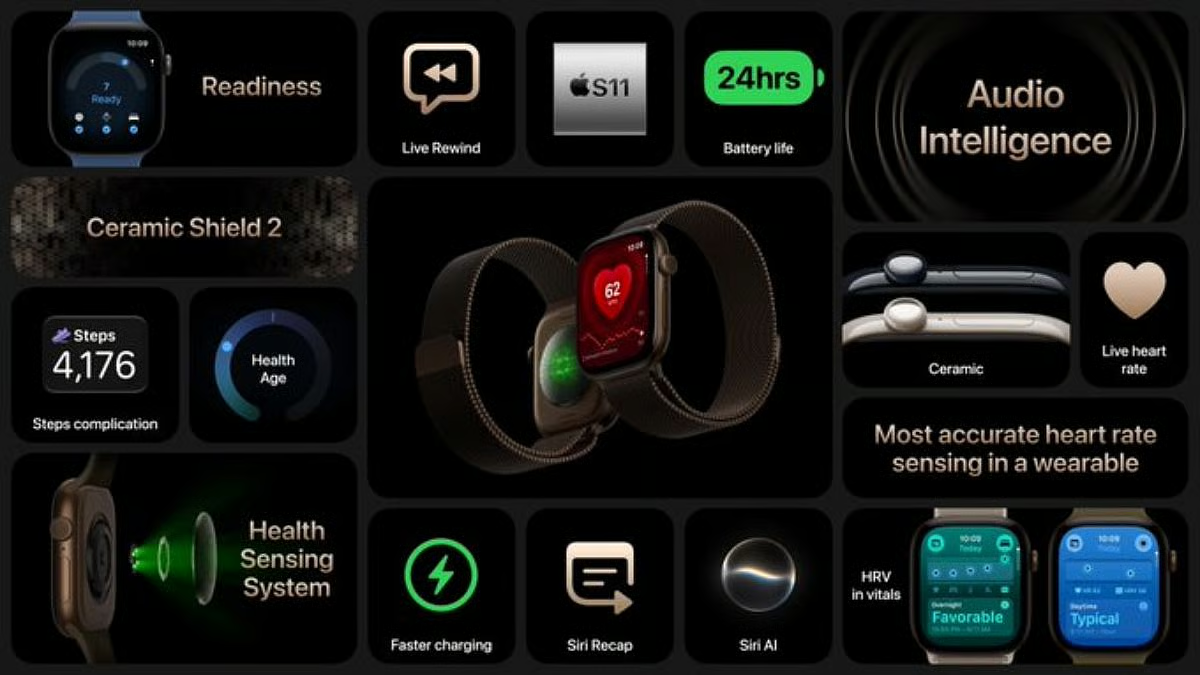
A number now sits at the centre of Apple's newest watch. Readiness score, they're calling it, a single figure meant to tell you, at a glance, how your body is holding up before you've even had your coffee.
Apple unveiled the feature alongside the Watch Series 12 and Watch Ultra 4, and it's the company's clearest answer yet to Oura, whose ring has built an entire following around exactly this kind of daily number. Apple isn't hiding the comparison. The readiness score pulls from health and fitness data already sitting on the device and turns it into something you can check the second you wake up.
But the bigger shift is happening under the hood. Apple says both new watches carry a redesigned heart-rate system that takes background readings every five seconds, all day, including when you're on the move. That's not a small bump. According to Apple, it works out to sixty times more heart-rate data than the previous generation collected.
The company credits a reworked sensor layout for the jump, one built for better skin contact and sharper optical reading. Bigger, more efficient green LEDs sit at the centre of it, designed specifically to hold accuracy steady while you're walking, running or just fidgeting through a meeting.
Heart-rate variability gets the same treatment. HRV can now be sampled as often as every five minutes, a 24-fold increase over what the older Apple Watch models managed. For anyone who's used HRV to gauge recovery or stress, that's the difference between a rough sketch and something close to a real-time graph.
Taken together, Apple's pitch is straightforward: more data, gathered more often, turned into something readable at a glance. Whether readiness scores of this kind change how people actually train or sleep is still an open question, Oura users have been living with the concept for years without it becoming a universal habit. What Apple is betting on is scale. Millions already wear an Apple Watch. Not all of them own a ring built specifically to obsess over recovery.
No Indian pricing or availability window has been detailed in what Apple has shared so far, and there's no word yet on whether older Apple Watch models will see any part of this heart-rate overhaul arrive as a software update rather than a hardware-only feature. That's the detail worth watching as more comes out of Apple's event.



Be the first to comment
Join the argument. No password, just your email or a passkey.