A decade-long free screening drive run through the ten days of Ganpati has turned up a quiet health crisis hiding behind the festival crowds at Mumbai's biggest pandals.
Forty percent. That's the share of devotees above 40 who walked into a free health camp at Ganpati this decade and walked out with a diabetes diagnosis they didn't know they had.
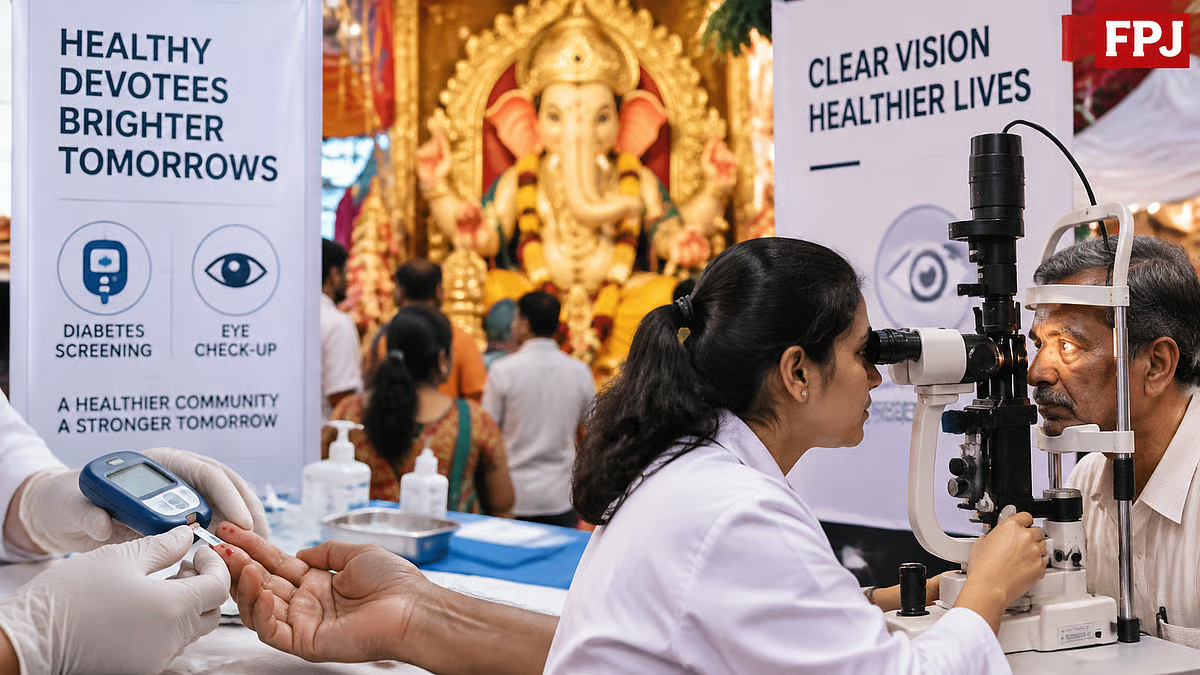
The numbers come from the Eyebetes Foundation, which has been setting up free diabetes and eye screening camps during the ten days of Ganpati since 2016. Founded by eye and retina surgeon Dr Nishant Kumar, the foundation says it screens more than 10,000 people every single year during the festival, which makes this one of the bigger informal public health exercises running anywhere in the city.
The age breakdown gets starker the older you go. Among devotees past 60, the foundation found around 60% were either prediabetic or diabetic. And for a lot of these people, the blood test at the pandal wasn't a check-up. It was the first one.
That's the part worth sitting with. People in their forties, fifties, sixties — squarely in the age bracket where diabetes risk climbs fast, had simply never been tested before. A festival queue became the first real look anyone had taken at their blood sugar.
The eye side of the data is just as telling. Roughly 70% of people who came through the foundation's screening couldn't manage 6/6 vision, the standard measure of what's considered normal eyesight. A large chunk of that, per the foundation, could be fixed with something as basic as the right pair of glasses. No surgery, no complicated intervention. Just glasses nobody had gotten around to getting.
Why any of this matters beyond the stat sheet: uncontrolled diabetes doesn't stay contained to blood sugar readings. It works on the eyes, the kidneys, the heart, the nerves, the blood vessels, and it can do real damage to eyesight specifically without throwing up any warning signs along the way. That's precisely why a screening camp catches things a person would otherwise miss until it's further along.
The methodology is fairly thorough for a pandal-side setup. The foundation runs HbA1c tests, which estimate average blood sugar over roughly three months rather than just a single-moment reading, alongside random blood sugar checks, basic vision assessment and retinal imaging done through non-mydriatic fundus cameras that don't need pupil dilation.
This year the foundation is scaling up. It's expecting more than 15,000 people to come through screening at two of Mumbai's most heavily attended Ganpati sites, the Siddhivinayak Temple in Prabhadevi and the GSB Ganpati Mandal at King's Circle.
Ten years in, the pattern hasn't really shifted. Devotees still show up for darshan and end up leaving with information about their own bodies they'd never bothered to check. Whether that number keeps climbing every visarjan season, or whether more people start getting tested outside a festival queue, is the thing actually worth watching once the immersions are done and the pandals come down.


Be the first to comment
Join the argument. No password, just your email or a passkey.