India’s watch moment isn’t coming—it’s already here, and it’s rewriting the rules.
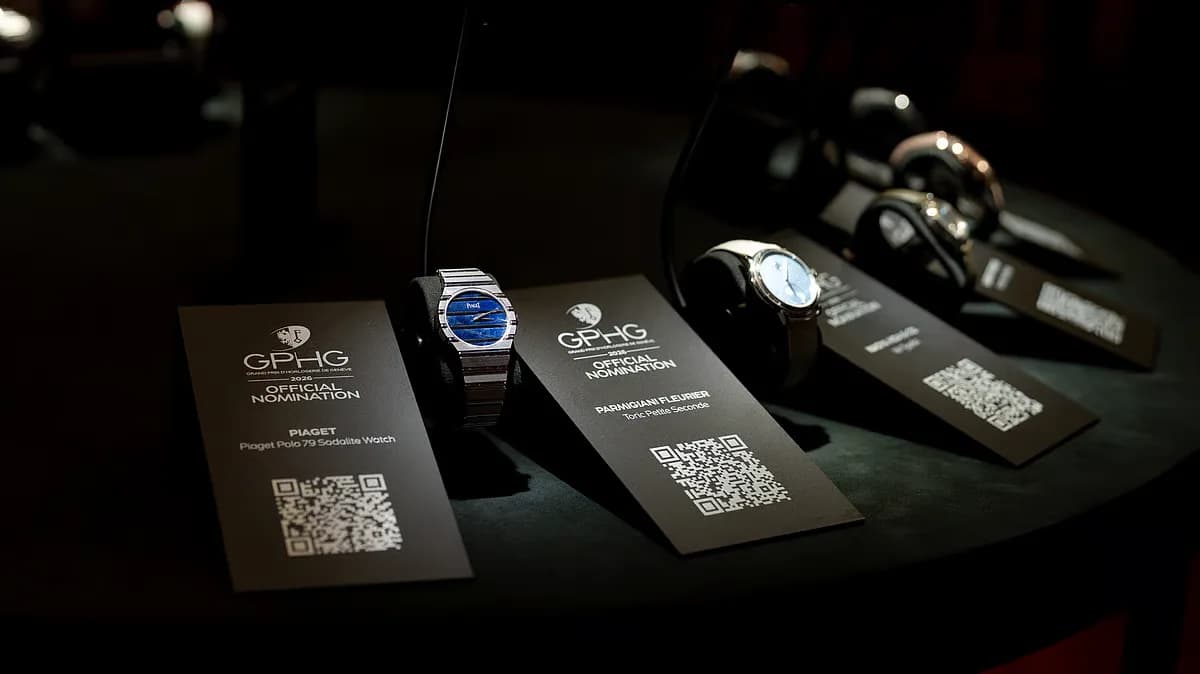
Mumbai has become the global epicentre of horological ambition. The Grand Prix d’Horlogerie de Genève’s 2026 World Tour kicked off here this week, marking India’s first official stop in the competition’s international journey — a signal that the country is no longer just a destination for luxury watches, but a force shaping their future.
Hosted at The St. Regis Mumbai in partnership with Ethos Limited, the exhibition brought together 78 of the 84 nominated timepieces across 14 categories, all competing for the Aiguille d’Or. This year’s edition also introduced expanded recognition: the Iconic Watch Prize can now honour a watch even if it wasn’t entered in the current cycle, while the Special Jury Prize broadened its scope to acknowledge contributions beyond formal entries.
For GPHG President Raymond Loretan, these changes reflect a mission that extends far beyond awards, ‘openness, excellence and transmission’ are now guiding principles. Since launching the GPHG Academy in 2020, the organisation has worked to make itself more inclusive, transparent, and globally representative. Loretan noted that the evolution isn’t just structural.
It’s cultural. He pointed to India as a place where something significant is emerging, even without a traditional watchmaking heritage. ‘Even without a watchmaking background, I can sense that something significant is happening here,’ he said during an interview with The Luxury Journal. Yashovardhan Saboo, chairman of Ethos Limited and a long-time partner of the GPHG, echoed that sentiment.
He described the transformation as one of participation: more voices in voting, selection, and decision-making. The diversity of entrants, established houses, independent makers, and new brands. Has deepened. Since the last GPHG event in India in 2022, Loretan observed a shift in buyer behaviour.
Collectors are no longer satisfied with mere ownership. They’re asking about craftsmanship, provenance, and story. That curiosity, he believes, signals the birth of a true watch culture. And India’s role in it may be pivotal.
With six entries from four Indian companies already in the mix, the nation is proving it can contribute not just volume, but originality. Saboo highlighted the dual nature of the Indian market: high-end collectors chasing rare, complex pieces, and a growing base of aspirational buyers entering the category for the first time.
He sees potential in the CHF 1,000 to CHF 5,000 segment, not just for sales, but for innovation. ‘The global watch industry cannot grow through value alone,’ he said. ‘It needs volume. India could provide that.’ The winners of the 2026 GPHG will be announced on November 7 in Geneva.
But the real verdict has already begun in Mumbai. The conversation around watches here is changing. It’s no longer about price tags. It’s about what time means.
And how India might redefine it.



Be the first to comment
Join the argument. No password, just your email or a passkey.