Maharashtra declares end to armed Maoism after 40-year war — but peace isn't just about the last bullet.
Maharashtra has declared itself free from active armed Maoists, the police announced Thursday in Mumbai. The statement marks the end of a four-decade-long conflict that began in the early 1980s when Maoist cadres moved into South Gadchiroli from Telangana, exploiting tribal grievances over forest rights and tendu leaves. By 2009-10, 379 armed Maoists were entrenched across Gadchiroli and Gondia — operating through nine dalams, four platoons, and two companies.
Traditional policing failed. Forest cover stood at 76%. IEDs littered roads. Language barriers blocked communication.
And Abujhmad, across the border, offered sanctuary. Enter K.P. Raghuvanshi. In 1990, as Superintendent of Police, he founded C-60, a force of 60 local recruits fluent in Gondi and Madiya, trained to fight on their own terrain. It grew into 29 teams in Gadchiroli and nine in Gondia, now supported by drones, MPVs, bomb squads, and dog units.
Over the years, 244 police personnel have died. 609 civilians too. But so have 363 Maoists been killed, 558 arrested, and 861 surrendered. Key encounters: Boriya-Kasnasur (2018), Mardintola (2021), Wandholi (2024). Then came Prabhakar, killed in Fodewada in January 2026 after a three-day operation.
The final push? Operation Antim Prahar in May 2026. Eight Maoists arrested. Five surrendered.
The last stronghold dismantled. Among them: Mallojula Venugopal Rao, alias Bhupati, Politburo member and Central Committee leader. He walked into the Chief Minister’s office with 61 associates and 54 firearms. A historic surrender.
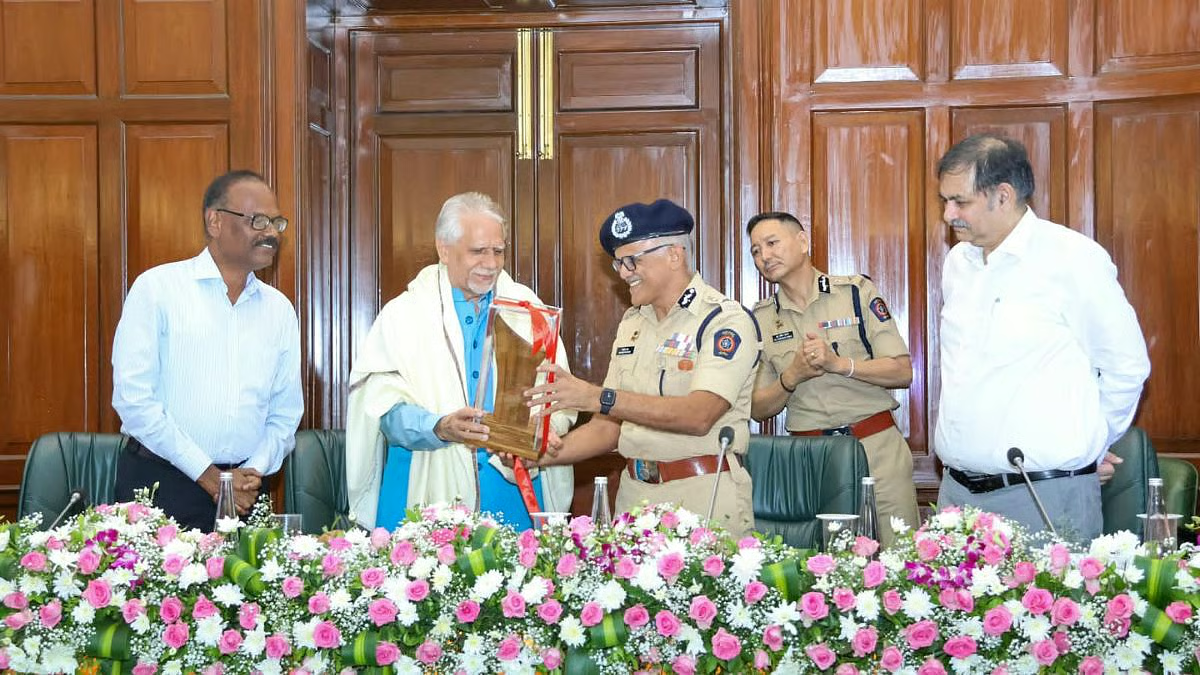
Now, 819 Maoists in Gadchiroli have laid down arms. Across India, 1,070 have surrendered with 637 weapons. The state honoured Raghuvanshi at the DGP’s office. His legacy cemented.
C-60 officers received three Shaurya Chakras, six President’s Police Medals for Gallantry, 358 Police Medals for Gallantry, and 22 Meritorious Service awards. In 2025, the government introduced the C-60 Service Medal. 425 personnel have been awarded it. Families of the fallen were remembered. The campaign is over.
For now. But the question lingers: what happens next in the villages where the guns fell silent?


Be the first to comment
Join the argument. No password, just your email or a passkey.