Legislative Council member Neelam Gorhe will chair a panel with powers to inspect sonography centres and order legal action where PCPNDT or MTP violations turn up.
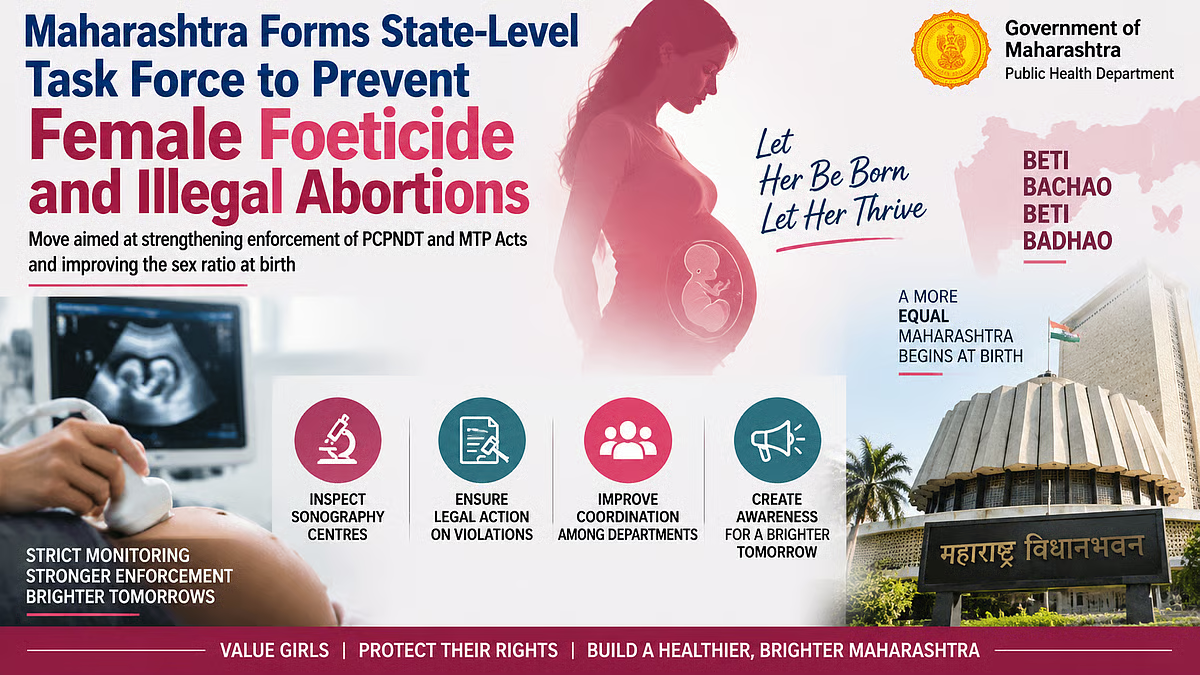
Maharashtra's Public Health Department has issued a Government Resolution setting up a state-level task force meant to tackle female foeticide and illegal abortions and, over time, improve the state's sex ratio at birth. Legislative Council member Dr Neelam Gorhe has been named chairperson, according to the Free Press Journal, which reported on the GR.
The panel isn't cosmetic. It follows reported violations of the Pre-Conception and Pre-Natal Diagnostic Techniques Act and the Medical Termination of Pregnancy Act in the state, and its brief is to tighten monitoring across sonography centres, diagnostic facilities and abortion clinics, while getting different government departments to actually talk to each other.
Six other Legislative Council and Assembly members join Gorhe on the task force: Dr Pragya Satav, Bhavana Gawali, Chitra Wagh, Uma Khapare, Dr Manisha Kayande, Sneha Dube Pandit and Shweta Mahale. The Additional Director of the State Family Welfare Office in Pune has been made member secretary, the administrative anchor for a body that will otherwise be doing a lot of its work on the road.
And that's the operational part worth noting. The task force isn't meant to sit in Mumbai issuing circulars. Members are expected to travel to districts and municipal corporation areas to check how the PCPNDT and MTP laws are actually being enforced on the ground, and to conduct surprise inspections of sonography and abortion centres alongside local authorities. Where something's off, the task force can direct the relevant authority to initiate legal action immediately, rather than routing it through slower channels.
District collectors, municipal commissioners and appropriate authorities named under the two Acts have been told to give the task force whatever administrative, technical or documentary support it asks for. So this comes with teeth, at least on paper.
The task force is also meant to function as a standing feedback loop. Beyond enforcement, it will flag gaps in how the laws are being implemented, hold coordination meetings with district officials, and recommend awareness campaigns pushing back against the preference for sons and promoting the birth of girls. None of that is new territory for Maharashtra, which has run PCPNDT crackdowns before with mixed results, but the structure here is meant to keep the pressure constant instead of episodic.
The panel has been given a three-year tenure and must submit a report with its findings and recommendations to the Public Health Department every three months. That quarterly cadence is really the thing to watch. Task forces get announced fairly often in Indian states. What matters is whether the first report, due within months, shows inspections that actually happened and violations that actually got acted on.



Be the first to comment
Join the argument. No password, just your email or a passkey.