A decade‑long effort led by Asha Chand will turn Sundri Uttamchandani’s short fiction into audio, with a student reading contest slated for October.
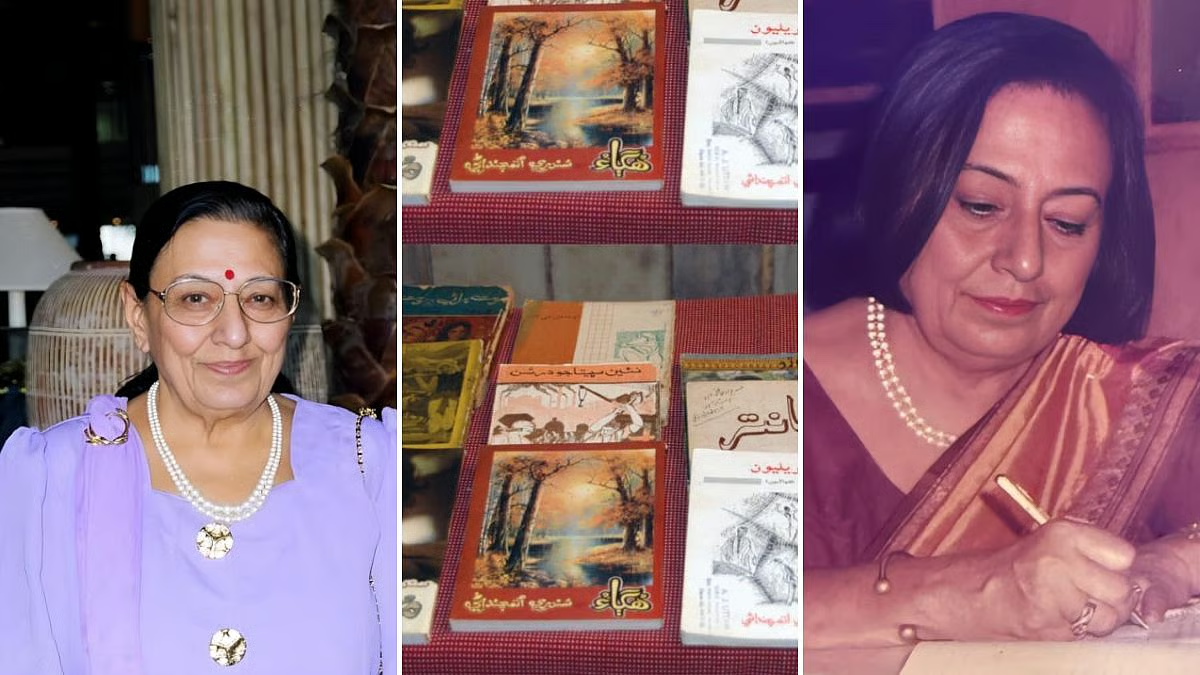
Mumbai’s literary circles are buzzing as a digital audio library of Sundri Uttamchandani’s short fiction goes live this week. The project, timed with the writer’s 103rd birth anniversary, will host a hundred stories in spoken form, letting young Sindhis who are comfortable with the language but not its script experience her work.
Asha Chand, the author’s daughter and a key figure in the language‑promotion group Sindhi Sangat, has overseen the conversion for more than ten years. "We’ve already recorded around thirty‑five pieces, but the pace is hampered by a shortage of voice‑over talent fluent in authentic Sindhi diction," she told the press. Chand herself voices the female characters, while comedian‑turned‑artist Ashok Chanchlani supplies the male parts.
The initiative does more than preserve texts. It aims to shift Sindhi literature from dusty shelves to the earbuds of a digital‑native audience. Sahitya Akademi’s Sindhi Advisory Board member Mohan Himthani warned that, in India, the language is drifting toward an oral‑only existence, with younger readers relying on Devanagari transliterations rather than the traditional Perso‑Arabic script. Turning printed stories into audio, he said, could spark renewed interest on platforms where today’s youth spend their time.
To amplify that momentum, Sindhi Sangat has launched a national story‑reading contest for students in classes ten to twelve. Participants must submit an unedited audio rendition of any Uttamchandani story by 15 October. Judges will evaluate pronunciation, fluency, expression and presentation, and the top entries will be streamed live on Zoom for a panel of literary experts.
The repository will be hosted on a dedicated website, accessible across devices. Listeners can browse by theme, length or narrator, making it easy to dip into Uttamchandani’s explorations of Partition, displacement and women’s lives. While the original author penned roughly twenty collections, the digital archive focuses on a curated selection of one hundred stories that showcase her narrative range.
Industry observers see the move as a template for other regional languages facing similar script‑learning hurdles. If the audio library draws enough traffic, it could encourage publishers to invest in similar projects for Gujarati, Punjabi or Malayalam literature.
For now, the Sindhi community watches the launch with cautious optimism. The success of the student competition, the quality of the recordings, and the level of online engagement will determine whether Uttamchandani’s voice truly reaches a new generation.
The deadline for contest entries is 15 October, and the full audio collection is expected to roll out in phases over the next few weeks. Stay tuned for updates on listener numbers and any follow‑up initiatives that may arise from this digital revival.



Be the first to comment
Join the argument. No password, just your email or a passkey.