



Skip to content
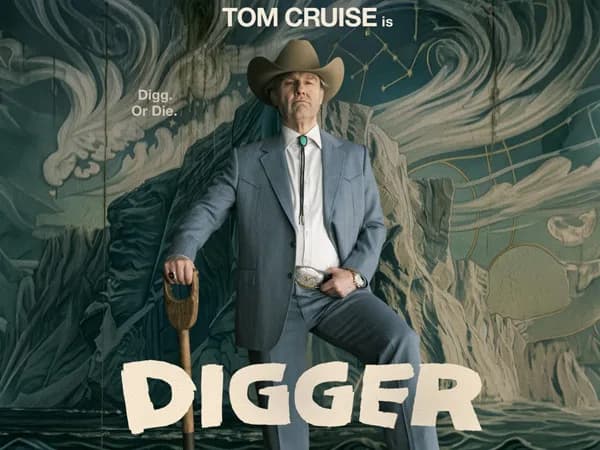
Tom Cruise in a dramatic pose as Digger Rockwell, standing amid a stormy industrial landscape, wearing a dark coat and looking toward the horizon.Photo via The Free Press Journal

Tom Cruise in Alejandro Iñárritu's Digger: A Satire That Stumbles

The film, a self-aware theatrical experiment, divides critics over its ambition versus emotional depth.

By Autoplay2 min read

In this story

Current hype level72

Live site hype

around 1 reading right now · 211 today

Tom Cruise steps into the role of Digger Rockwell, a fossil-fuel baron at the edge of disaster, in Alejandro G. Iñárritu’s latest, Digger. The film opens with the familiar beats of a climate catastrophe thriller — wealthy denial, corporate cover-ups, and looming environmental collapse. But then it pivots. Reality unravels. What seemed like a documentary-style exposé is revealed as a play within a play, rehearsed by actors who are themselves playing characters in a critique of greed and spectacle.

The conceit is audacious. Iñárritu isn’t just making a movie about climate denial, he’s making a movie about how we make movies about climate denial. The screenplay leans into theatrical excess, with characters shouting their moral outrage rather than speaking it. It’s a deliberate choice, one that aims to mirror the performative nature of modern political discourse. But as the Free Press Journal notes, the joke begins to blur with the target. The film’s stridency, meant to mock, starts to feel like endorsement.

Cruise delivers a performance that’s all jagged edges and shifting identities. Swagger, affectation, vulnerability, sometimes seeming to break through the character’s mask. Riz Ahmed provides much-needed restraint and dry wit, while Jesse Plemons and Michael Stuhlbarg add texture. Sandra Hüller, despite her presence, gets little to do.


Visually, Digger is a triumph. Emmanuel Lubezki’s cinematography carves clear lines between the artificial stage world and the real one beyond it. Production design embraces the theatrical illusion, and Cosmo Sheldrake’s score doesn’t whisper. It shouts. Yet for all its technical brilliance, the film struggles to land emotionally. The ideas are sharp, the structure complex, but the people inside them remain distant.

Critics aren’t united. Some see it as a necessary provocation. Others call it a self-sabotaging exercise in cleverness. One reviewer described it as a ‘hate letter to life, cinema, art, and its own audience.’ Another called it a dream of reaching for the stars, maybe even Alpha Centauri.

What remains is a film that knows exactly what it’s doing. And perhaps too well. It’s not a failure. But it’s not a connection either. It’s a puzzle built to be admired, not felt.

The question now isn’t whether Digger will be seen. It’s whether anyone will care after the first act ends.

About the film

Digger

2 October 2026 · in theatres · cast, trailer and release details

Reported from

This article was written by the CutMirchi desk from the reporting above. Facts are attributed to their original publishers.

What did you make of it?

Be the first to comment

Join the argument. No password, just your email or a passkey.

    Read next