The East Room gathering saw CEOs from Apple, Nvidia, Tesla and Meta sit beside the two leaders as Washington’s China policy took center stage.
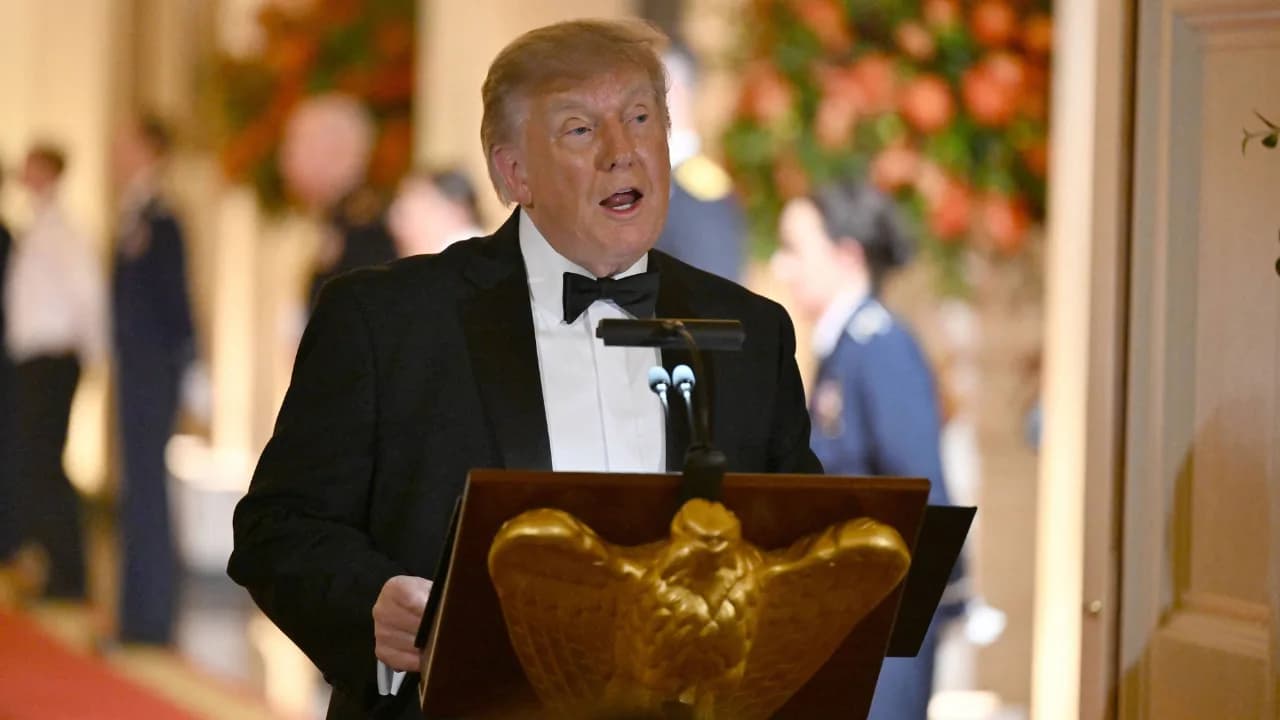
President Donald Trump turned a formal state dinner into a showcase of his China play, inviting Chinese President Xi Jinping to the White House’s East Room while a roster of America’s biggest tech CEOs took their seats.
The guest list read like a who’s‑who of the U.S. Tech elite: Apple’s Tim Cook, Nvidia boss Jensen Huang, Tesla and SpaceX head Elon Musk, Amazon’s Jeff Bezos, Meta founder Mark Zuckerberg, Google chief Sundar Pichai, OpenAI’s Sam Altman and his partner Greg Brockman, LVMH’s Bernard Arnault and a trio of Supreme Court justices. All arrived under the same chandelier, a visual reminder that commercial clout still walks hand‑in‑hand with diplomatic ceremony.
Trump veered off his prepared script before the meal, gesturing toward a half‑finished ballroom and bragging that the space could hold “over a thousand people, standing room only.” The actual room, he noted, seats about 145. The off‑the‑cuff comment set a tone of bravado that matched the evening’s menu – sesame‑crusted sea bass, braised bok choy and a vanilla crémeux served on Reagan‑era china.
The dinner capped Xi’s first U.S. State visit since 2015. The two leaders used the earlier joint appearance to flag trade, artificial‑intelligence competition and Taiwan. By the time the plates arrived, the conversation had shifted from policy to the very engines of that policy – the AI and hardware firms that dominate the global supply chain.
OpenAI’s Altman used his platform to warn against a reckless AI race, posting on X that “no amount of American competitive pressure should justify recklessness.” He sat beside Brockman, whose recent $25 million donation to a Trump‑aligned super‑PAC points to the tangled web of money and influence. Musk, who has long floated the SpaceX‑AI partnership, echoed the call for caution, saying safety must stay front‑and‑center.
Nvidia’s Huang, by contrast, brushed aside apocalyptic forecasts. In a recent interview he dismissed predictions of human extinction by 2030 as “doomsday narratives” with a zero‑percent chance. Huang prefers a company‑led approach to safety and has pushed to keep advanced AI chips flowing into China, a move that has drawn fire from national‑security hawks.
The corporate presence highlighted a paradox: while the administration leans on tariffs to pull manufacturing home, many of the guests still lean heavily on Chinese factories, consumers or markets.
Apple, now led by Cook, still ships a bulk of its devices from China, even as it nudges parts of the supply chain toward India. The iPhone’s Chinese sales remain a vital revenue stream, despite Beijing’s occasional censorship demands.
Tesla’s Shanghai plant, which Musk once called a “gem,” continues to churn out vehicles for a market that now rivals the United States in size. Musk’s public praise for the facility came in a CCTV interview ahead of his Washington trip.
Amazon’s marketplace still lists more than half of its global sellers from China, and many of its private‑label goods are made there, making the tariffs a double‑edged sword for the e‑commerce giant.
Google’s story is a longer one. After pulling its search engine from mainland China in 2010, the firm now sells advertising to Chinese exporters and is shifting production of its Pixel hardware out of the country.
Zuckerberg’s relationship with Beijing has swung like a pendulum. Once a courtship that saw him walk through Tiananmen Square and deliver a Mandarin speech at Tsinghua, the Meta founder now brands Chinese censorship models as a threat and pushes back against Beijing’s digital playbook.
The dinner, therefore, was less a culinary affair than a live‑action boardroom where policy, profit and geopolitics collided. As the night wound down, the lingering question for Washington was how to balance a hard‑line stance on China with the reality that its own economic engine still runs on Chinese parts and consumers.
What Comes Next?
The next steps will likely surface in the coming weeks as lawmakers debate AI regulation, and as the administration decides whether to tighten or ease export controls on advanced chips. For the tech CEOs at the table, the dinner was a reminder that their fortunes are inextricably linked to the very diplomatic chessboard they just witnessed.

Be the first to comment
Join the argument. No password, just your email or a passkey.