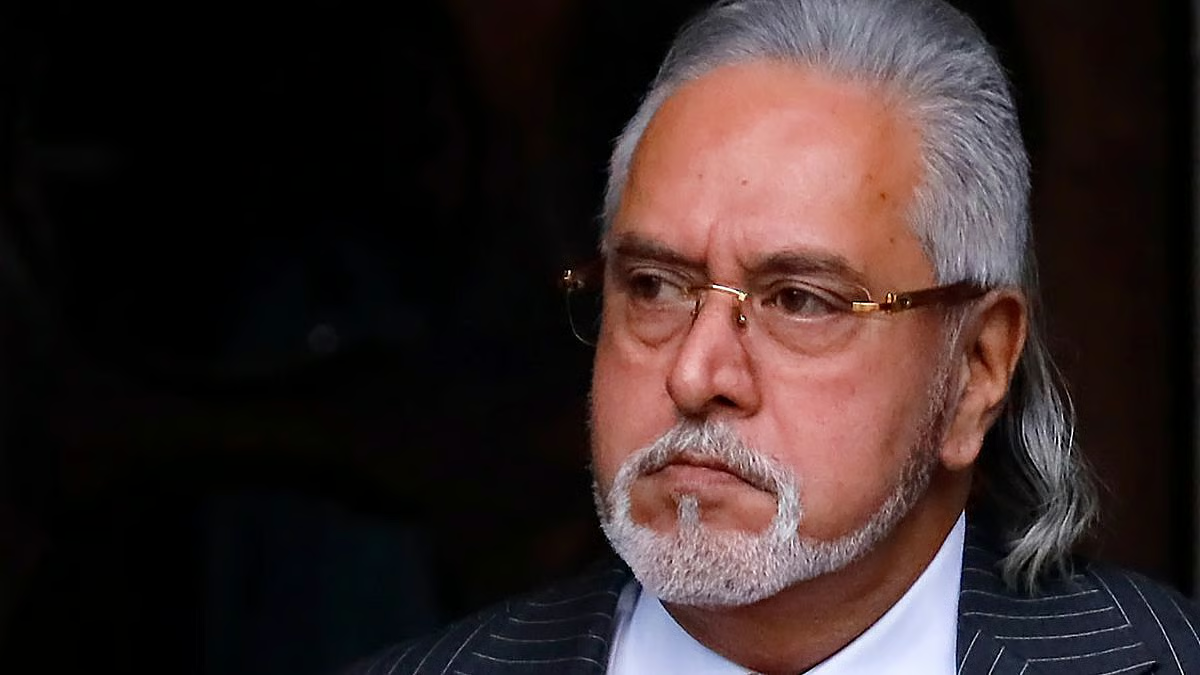
The liquor baron pushed back on the fugitive label in a fresh string of posts on X, days after the Bombay High Court told him he cannot dodge its jurisdiction and still ask for relief.
Vijay Mallya wants everyone to stop calling him a bhagoda. In a fresh round of posts on X, the liquor baron argued he isn't dodging Indian courts by choice, he's stuck in Britain by law.
"I have been a permanent resident of the United Kingdom since 1992 and am currently legally prohibited from leaving this country," Mallya wrote, adding that the Indian government's handling of his case has been "grossly unjust."
It's a claim that sits awkwardly against the government's own record. In October 2025, Minister of State for Finance Pankaj Chaudhary told the Lok Sabha that 15 individuals, Mallya and Nirav Modi among them, have been formally declared Fugitive Economic Offenders under the 2018 law. Two months earlier, MEA spokesperson Randhir Jaiswal had said New Delhi remains "fully committed" to bringing back economic offenders to face trial, while acknowledging that "several layers of legalities" are slowing things down.
Mallya's posts read less like a defence and more like a running ledger. He cited what he described as an affidavit filed by the Enforcement Directorate in the Bombay High Court, claiming it shows Rs 14,131.60 crore recovered from him back in 2021 against a judgment debt of Rs 6,203 crore. "Five years on I am still referred to as a fraud who cheated the Banks," he wrote, asking pointedly when he might see a refund.
He went further, posting a table of what he called a statement of account and asking whether he still "deserves" the framing he gets in Indian media. In an earlier August post, he'd made a similar case, that banks and the government have "admitted" recovering Rs 14,100 crore against that same Rs 6,203 crore debt.
None of these figures have been independently verified against the underlying court filings, and the ED has not issued a public response matching Mallya's numbers to his account of them.
The timing matters. In February this year, the Bombay High Court, in a bench headed by Chief Justice Chandrashekhar, had a sharp message for Mallya: you can't seek equitable relief while deliberately avoiding the court's jurisdiction. The bench gave him one final chance to say whether he actually intends to come back to India. That petition, still pending, challenges the constitutional validity of the Fugitive Economic Offenders Act itself and the order that declared him a fugitive under it.
So the fight isn't just about numbers on a spreadsheet anymore. It's about whether Mallya shows up, or sends another thread instead. The Bombay High Court's patience, going by its February remarks, isn't infinite. What Mallya tells the bench next, and whether he tells it in person, is the thing to watch now, not another post on X.


Be the first to comment
Join the argument. No password, just your email or a passkey.