A tractor tyre had wedged itself so tight around the animal's neck in Golaghat district that it took a coordinated multi-agency operation to cut it loose.
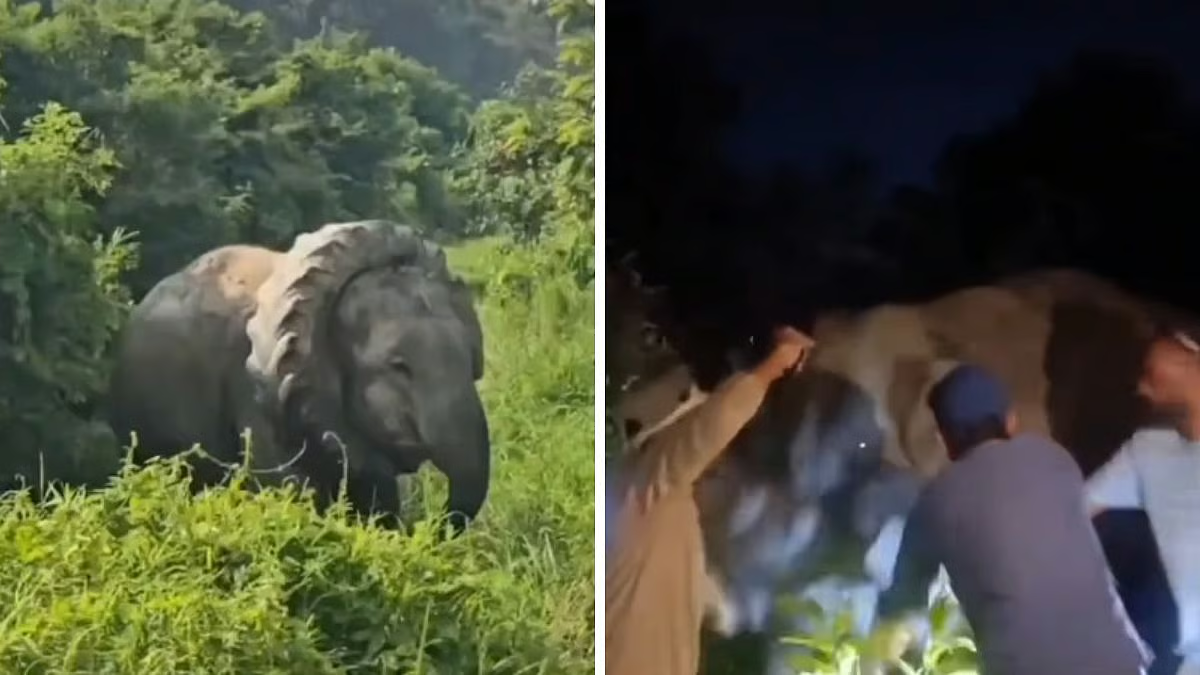
A wild elephant wandering through Golaghat district in Assam turned up this week with a tractor tyre wedged so tightly around its neck that it couldn't shake it loose on its own.
Someone spotted the animal in distress and word travelled fast. What followed was a rescue that pulled in the Centre for Wildlife Rehabilitation and Conservation, run out of Kaziranga, along with the Golaghat Forest Division and a bunch of local residents who helped keep the operation moving on the ground.
The team got the tyre off. The elephant, per the Free Press Journal's report on the rescue, walked away with what's being called a second chance at life.
Nobody knows how the tyre ended up around its neck in the first place. That's the part that should bother you more than the video does.
Golaghat sits close enough to human settlement that elephants moving through the district regularly cross paths with farmland, roads, and whatever gets dumped near them. A tractor tyre isn't the kind of thing that ends up around an animal's neck by accident in the wild. It gets there because it was lying somewhere it shouldn't have been, and an elephant walked into it, or through it, in a way nobody was around to see.
This isn't the first time discarded human waste has turned into a wildlife hazard in the region, and forest officials have said as much before without it changing very much on the ground. Rescue operations like this one work because CWRC has the vets and the equipment and the experience to move fast when a call comes in. But every successful rescue is also a small admission that the mess got made first.
There's no word yet from the Golaghat Forest Division on whether they're looking into where the tyre came from, or whether anyone's being asked questions about it. For now, the elephant's fine. The next one might not spot the tyre in time, or the fishing net, or the plastic drum, or whatever else is sitting at the edge of a field waiting to become somebody's Thursday emergency.
The video is already doing the rounds online, shared widely enough that most people who follow wildlife content in India will have seen it by the weekend. What happens after the cameras stop rolling, whether Golaghat tightens anything about how waste gets stored near elephant corridors, is the part nobody's filmed yet.




Be the first to comment
Join the argument. No password, just your email or a passkey.