The ten-day Ganeshotsav runs through Anant Chaturdashi on September 25, and households are already settling on backdrops, platforms and lighting for the mandap at home.
Ganesh Chaturthi falls on Monday, September 14 this year, which means the countdown to Ganeshotsav has already started in most Maharashtrian and Konkani households. The festival runs its usual ten-day course and wraps up with visarjan on Anant Chaturdashi, September 25, when Bappa gets his send-off amid drums, colour and, in most cities, fairly serious traffic.
Before any of that, though, there's the small matter of the mandap. For a lot of families, the days before Chaturthi aren't spent on puja samagri alone. They're spent figuring out exactly how the corner of the house where the idol will sit for ten days is going to look, and that decision-making seems to have turned into its own mini pre-festival ritual.
The backdrop does the heavy lifting
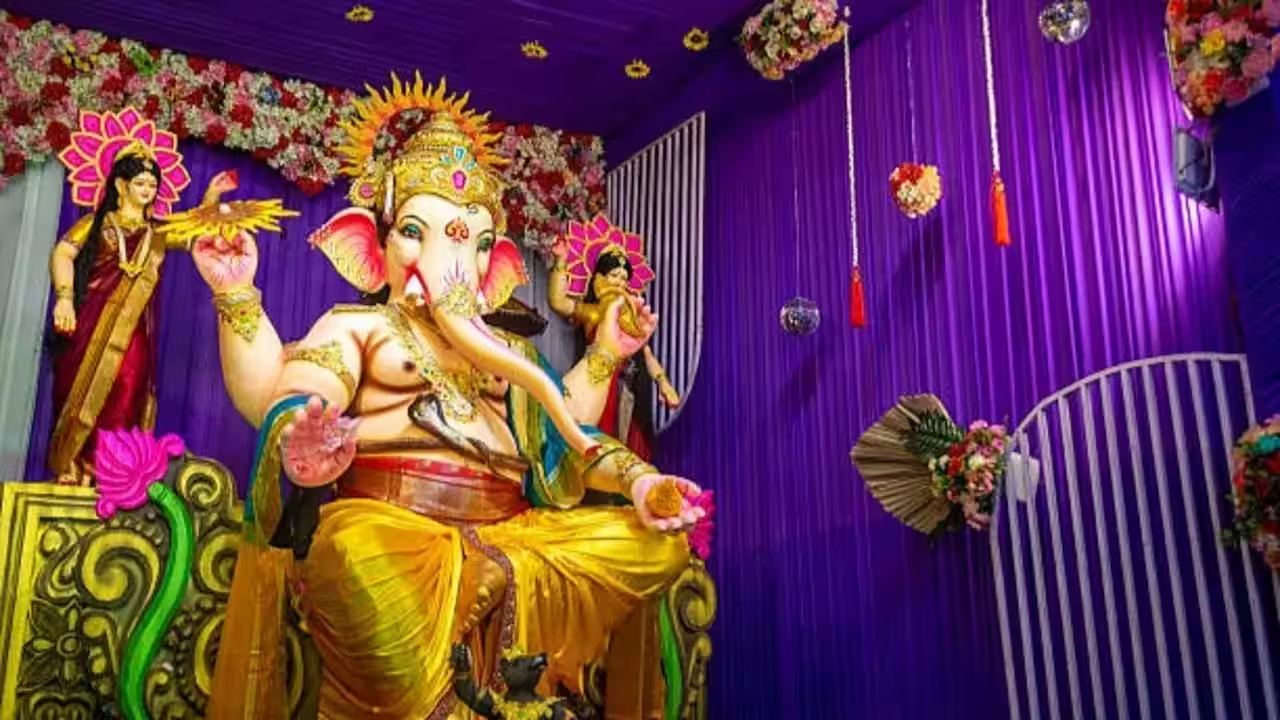
According to decor ideas doing the rounds this year, the single biggest call in the whole setup is the backdrop, because it sets the tone before a single flower goes up. Draped fabric in maroon, gold or deep green gives an instant temple feel and hides an ordinary wall in one move. Families with more patience go the thermocol route, carving arches and peacock motifs that get reused year after year. And if you're short on time, printed banners of Maharashtrian architecture or a plain sky-and-clouds motif can go up in minutes.
The idol itself usually sits on a raised platform, a wooden stool or a stack of crates draped in silk or a zari-bordered dupatta, tiered if the family wants a proper focal point rather than something thrown together at the last minute.
Flowers, light, and the traditional touches nobody skips
Marigold garlands remain the default, paired with roses or hibiscus for that classic orange-red-yellow palette, though artificial versions have gotten good enough that plenty of households now skip the daily upkeep. Fresh flower rangoli at the base of the idol adds texture without needing much skill.
Lighting is where a mandap either comes together or looks off. Warm white fairy lights beat harsher standard LEDs for that temple glow, and battery-operated diyas solve the naked-flame-near-fabric problem without giving up the look entirely.
The smaller traditional elements, a mango-leaf toran, a brass or silver kalash with coconut and betel leaves, an aarti thali kept in view rather than tucked away, round out what's really a puja setup dressed up as decor.
Themes, and what happens outside the mandap
Eco-conscious families have been leaning into clay, jute and dried flowers for a few years now, partly for the look and partly because it makes visarjan easier on the conscience. Others go for a heritage wada theme with terracotta and brass, or a bright, paper-craft version if there are kids around who want in on the project.
And the decorating doesn't have to stop at the mandap. Rangoli at the entrance, torans on the front door, paper lanterns down the hallway, all of it builds anticipation before guests even reach Bappa. With September 14 a few days out, this is roughly the window when most of that gets sorted.


Be the first to comment
Join the argument. No password, just your email or a passkey.