A vampire film shot in a desert during a war, surviving hailstorms and missile alerts—then thriving at festivals. This isn’t just horror. It’s defiance.
Samjad’s ‘Half’ isn’t just a vampire action film — it’s a survival story in three acts: the shoot, the war, and the blood. The Indian director’s new movie, which he co-wrote with Praveen Viswanath, has already made waves at TIFF Midnight Madness and Fantastic Fest, where audiences reportedly left screaming for more.
It’s not a reboot of Blade, nor is it a Marvel project, though Kevin Feige may be regretting passing on Mahershala Ali’s pitch. This is something else entirely: a raw, daytime-battle fantasy built on the idea that vampires don’t need slow motion to be terrifying. They just need dirt, sweat, and a camera that doesn’t auto-stabilise.
And yet, the film nearly didn’t happen. Samjad shot it in a desert where temperatures hit 56°C. Hot enough to melt tripod legs, and where hailstorms wiped out entire sets in minutes. One day, the weather was perfect. The next?
A deluge. Then, during the 11th day of filming, the India-Pakistan war erupted. Crews were evacuated from the middle of nowhere, missiles streaking across the sky as they fled. Two months later, they returned.
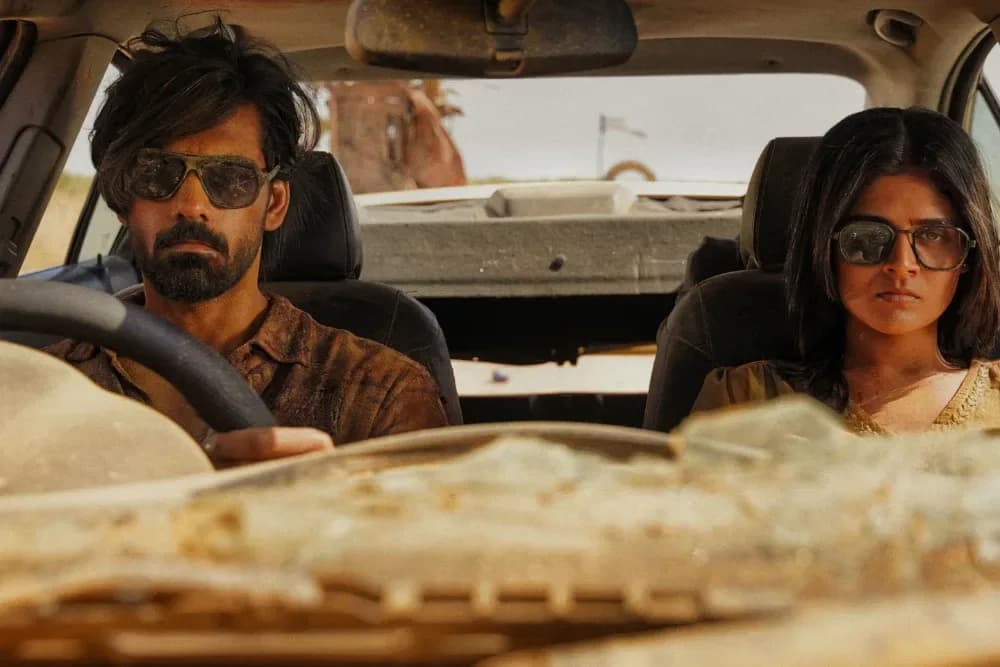
Same location. Same fight. Different world. The film stars Ranjith Sajeev and Aiswarya Raj as twin siblings who survive a highway attack thanks to their half-vampire biology.
A twist Samjad invented to avoid cliché. No sunlight burns them, but healing only works in shadow. Their powers aren’t infinite. They’re conditional.
That’s the core of the mythos: vulnerability wrapped in strength. He drew from old Indian vampire lore, black-and-white films from the ’70s and ’80s, regional tales with names lost to time. And fused them with ’80s-’90s cinematic textures. Zoom lenses.
Manual pans. Grainy film stock. No robotic cams. Just hands.
The result? A gory, funny, bone-crunching brawler that feels like a fever dream from a forgotten era. Fight choreography comes from Very Tri Yulisman, known for The Raid 2 and The Night Comes for Us. But this isn’t about style, it’s about clarity.
Every punch lands. Every drop of blood is real. And every frame is lit by daylight, because Samjad wanted the violence to feel immediate, not cinematic. Now, the film is headed to Sitges Film Festival.
U.S. Distribution remains uncertain. But if the screenings at TIFF and Fantastic Fest are any indication, genre fans won’t wait for a distributor. They’ll find it. The question isn’t whether Half will thrill.
It already has. The real question is: what happens when the next war breaks out? And who’s going to shoot the next scene?
Be the first to comment
Join the argument. No password, just your email or a passkey.