The Commerce Ministry has dropped mandatory registration certificates for small overseas shipments, a move aimed at helping first-time exporters and artisans test foreign markets without upfront paperwork.
This one has nothing to do with red carpets, but it lands on a Wednesday that otherwise belonged to trailers and box office numbers, so here it is straight.
The Commerce Ministry has amended Paragraph 2.57 of the Foreign Trade Policy, 2023, to exempt small exporters from a compliance requirement that's tripped up first-timers for years. Any export consignment valued up to ₹3 lakh no longer needs a Registration-cum-Membership Certificate or a Certificate of Registration, even in cases where the Foreign Trade Policy would normally demand one.
The Directorate General of Foreign Trade pushed the amendment through. Anything above ₹3 lakh in free-on-board value still needs the paperwork, wherever it was required before. Nothing changes there.
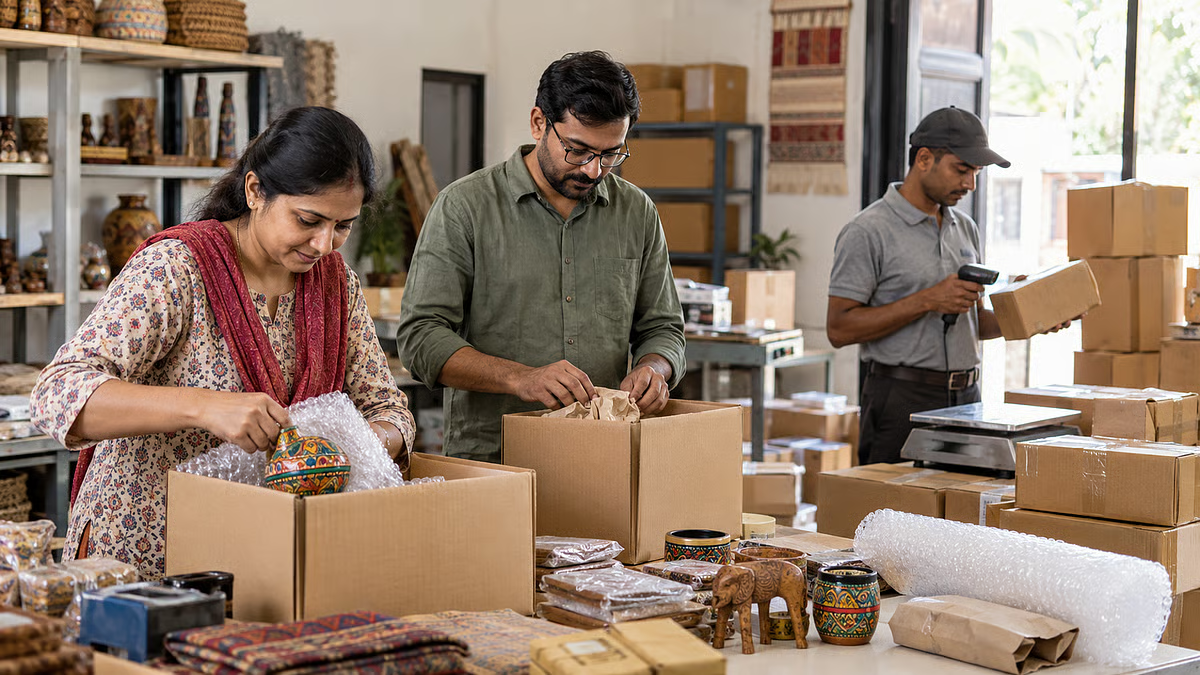
Who does this actually help? MSMEs, artisans, small manufacturers, and the entrepreneur shipping their first batch of goods abroad through a courier service or an e-commerce platform. Those are the categories the ministry named specifically. The exemption covers postal, courier, e-commerce and other emerging export routes, which is where a lot of small-value trade happens these days anyway.
Here's the number that makes the case for doing this. Government data spanning five years, from 2021-22 to 2025-26, shows shipments valued up to $3,000 made up 43% of all shipping bills filed. Their share of India's total merchandise export value? 0.86%.
Read that gap again. Nearly half the paperwork volume, less than one percent of the money. The registration requirement was, in effect, a compliance tax on people making tiny shipments, while doing almost nothing to protect or track the export value that actually matters at the macro level.
Before this, anyone wanting to ship goods overseas generally had to register with the relevant Export Promotion Council or Commodity Board first, assuming their product category required it. That meant figuring out which authority you were even supposed to register with, filing the right documents, and clearing the formalities, all before you'd shipped a single box to see if there was demand for your product abroad.
For a small manufacturer or an artisan trying to figure out if their product sells in a foreign market, that's a real barrier. Now they can ship, test demand and build a track record without clearing that hurdle first.
The ministry's own framing backs this up. Once a business crosses the ₹3 lakh threshold on a consignment, it goes and gets the registration that unlocks access to export promotion schemes, market development assistance and other institutional support. Below that threshold, it's a much shorter road from packing a box to shipping it internationally.
What happens next is the usual policy question: does easing entry actually move the needle on how many small exporters show up, or does it just reduce paperwork for the ones who were shipping anyway. That's a numbers question for the next few quarters, not this one.


Be the first to comment
Join the argument. No password, just your email or a passkey.